
Boots or Trail Runners? The Honest Answer Depends on Three Things
Trail runners won over the long-distance crowd, but plenty of backpackers are still better off in boots.
This post contains affiliate links. If you buy through them, we may earn a commission at no extra cost to you. As an Amazon Associate we earn from qualifying purchases.
Walk any long trail in summer and look down. You’ll see a lot of mesh and not much leather. Trail runners have become the shoe of choice for a lot of long-distance hikers, and the old advice to “break in your boots before the big trip” doesn’t come up much on a thru-hike anymore.
That doesn’t make boots wrong. REI’s footwear experts say flatly that neither option is right for everyone, and they’re right. The answer comes down to three things: what’s on your back, what your feet and the trail ask for, and the season you hike in. The picks below come from published tests by Treeline Review, OutdoorGearLab, CleverHiker and others, named throughout. Prices change too often to list here, so check the current price before you buy.
- Best trail runner for most backpackersAltra Lone Peak 9+: Treeline Review's best overall trail runner for hiking, with a roomy toe box and a grippier sole than past versions. Check the price on Amazon
- Most cushionedHOKA Speedgoat 7: OutdoorGearLab calls the cushioning "crazy comfortable." Check the price on Amazon
- Most durable trail runnerTopo Athletic Pursuit 2: one Treeline tester wore a single pair for a 600-mile thru-hike. Check the price on Amazon
- Best boot for most backpackersSalomon X Ultra 5 Mid GTX: #1 on Treeline's 2026 reader-favorites list, and light enough to win over a trail-runner convert. Check the price on Amazon
- Best budget bootColumbia Newton Wander: Treeline's pick for new backpackers who need a reliable boot at an affordable cost. Check the price on Amazon
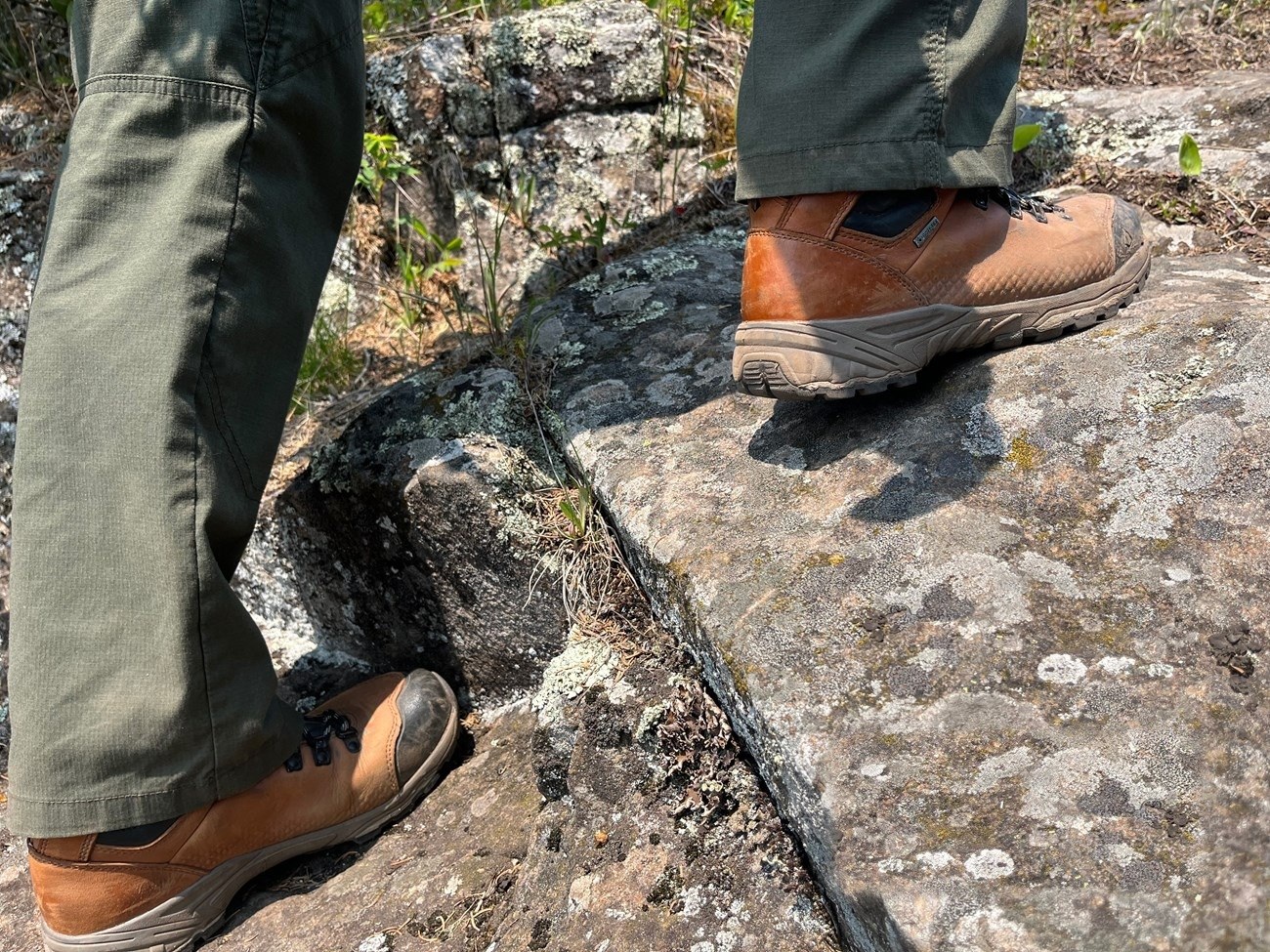
Why so many backpackers switched
The case for trail runners is mostly about weight and comfort. REI says “lightweight trail runners make it easier to maintain a brisk pace,” which is why so many thru-hikers wear them. Treeline Review puts it more bluntly: “traditional hiking shoes are heavy, slow to dry, and often take miles to break in,” while trail runners “require far less break-in.” REI adds that trail runners keep feet drier and need little or no break-in.
There are real trade-offs. REI lists trail runners as “less supportive,” and says they “will need replacing more often.” Treeline’s testers expect anywhere from about 350 to 600 miles from the trail runners below, depending on the shoe. Some light trail runners also have less grip at a slow hiking pace, REI notes, because they’re designed for running.
One more thing nobody warns you about: a Treeline writer’s feet permanently grew two sizes over a thru-hike. Whatever you wear, leave a little room.
The three things that decide it
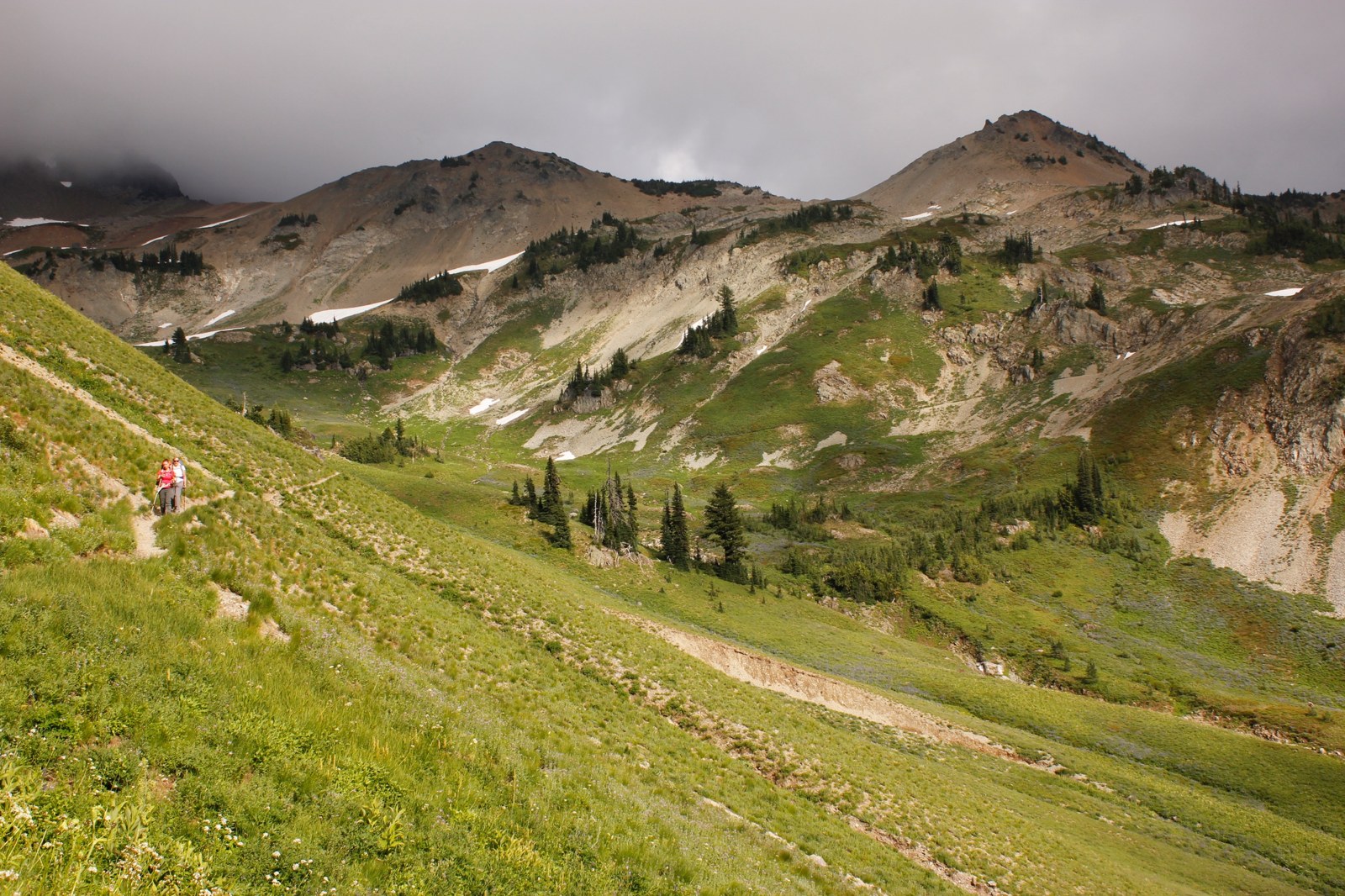
1. What’s on your back
This is the big one. REI says that if you’re carrying a heavy pack, “a solid, stable hiking boot may be your best choice.” It also says that if you have no history of leg or joint problems and won’t carry a heavy load, “you’re probably a good trail-runner candidate.” The wide, thick soles on boots give a stable base for every step, which REI says helps beginners carrying a pack.
Testers back this up from both directions. OutdoorGearLab found the cushy HOKA Speedgoat 7 weaker under heavy backpack loads. And even a boot isn’t a cure-all: CleverHiker says the light Salomon X Ultra 5 Mid isn’t built for heavy loads, and its tester noticed ankle flex at 35 pounds and up. For most people, the best footwear upgrade is a lighter pack. Then nearly anything feels better.
2. Your feet, your ankles and the trail
REI says “sketchy trails require beefier boots,” while gentle trails need only light footwear. Rocky, rooty, off-trail or steep terrain favors more shoe.
Your own feet matter just as much. If you have foot, ankle or joint problems, Treeline suggests checking with your medical professional, “who may recommend a traditional hiking boot.” That’s exactly why one Treeline writer moved from trail runners to the Salomon X Ultra 5 Mid: a podiatrist encouraged the switch for more protection and stability. A mid-height boot isn’t automatically a brace, though. The same writer found the ankle support mild, and OutdoorGearLab says you have to lace the padded ankle tight to get real support.
3. Your season
REI says hikers in cold, wet conditions “might prefer the warmth and protection of a sturdy boot,” and recommends trail runners for hot weather. GearJunkie’s reviewer goes further: “If the temperature is above about 80, a GORE-TEX boot is not a great choice.” Treeline agrees that waterproofing is worth it in cold shoulder-season hiking. Whether a waterproof membrane helps or hurts the rest of the year is its own debate, covered in when waterproof hiking shoes help and when they backfire.
The quick version
- Boots make sense if you’re new to backpacking, carrying a heavy load, hiking rough or off-trail terrain, heading out in the cold, or have a history of ankle or joint trouble.
- Trail runners make sense if your pack is light, your ankles are healthy, you’re hiking long miles on established trail, or it’s warm out.
- There’s a middle ground. REI points to “lightweight day-hiking boots with mesh uppers” and “high-top, off-trail-style trail runners.” The Salomon X Ultra 5 Mid lives right in that space.
If you do switch to trail runners, ease in. Treeline’s Pursuit 2 tester suggests building up slowly if you’re not used to zero-drop shoes or a low stack height.
Picks for the trail-runner side
Altra Lone Peak 9+. Treeline Review names it its best overall trail runner for hiking. The extra-wide toe box “is especially helpful in hot environments, where your feet swell as the day goes on,” and the shoe “breathes well.” The new Vibram Megagrip sole “solves our biggest gripe with previous Lone Peak models,” Treeline’s reviewers write, and it does better in the wet overall. They’ve backpacked in the Lone Peaks and call them “great for all these uses.” Treeline tested both the men’s and the women’s version. The catch: it “doesn’t have the most cushion,” the wider fit feels slightly less stable than some shoes, and arch support is minimal. It’s also zero-drop, which takes some getting used to. Treeline’s writers expect roughly 350 to 400-plus miles from a pair.
HOKA Speedgoat 7. This is the one for people who want cushion. OutdoorGearLab calls it “crazy comfortable” and says its Megagrip sole “sticks to granite.” A Treeline writer expects about 500 miles before the lugs wear down and found plenty of room for wide arches. The catch: testers disagree on the fit. Treeline’s writer calls the toe box roomy, but OutdoorGearLab says it fits half a size short and the toe box isn’t the roomiest, and GearJunkie calls it medium to narrow. Trail & Kale rates breathability as average, and OutdoorGearLab found it weaker for side-hilling and heavy loads. Try a half size up.
Topo Athletic Pursuit 2. Treeline’s Naomi Hudetz wore one pair for an entire 600-mile thru-hike, and says “the outsoles and uppers still look surprisingly good.” After frequent stream crossings, it “drained fast and easily and dried quickly.” Treeline also praises its “incredible lateral stability,” and Hudetz’s feet didn’t feel like they were dragging even with a heavy pack. It has a wide toe box like the Lone Peak, with more cushion. The catch: it’s zero-drop, so ease into it. Hudetz also got an unusual blister on the big toe, and color choices are limited.
Picks for the boot side
Salomon X Ultra 5 Mid GTX. It tops Treeline’s 2026 reader-favorites list, and it’s the boot most likely to please someone coming from trail runners. Treeline’s tester found it comfortable out of the box, sticky on wet, muddy ground, and among the most breathable boots they tried. OutdoorGearLab calls it “one of the lightest waterproof hiking boots we’ve ever tested” and praises its stability. The catch: testers can’t agree on fit (long and narrow, a touch small, or average, depending on who you ask), so try it on. Treeline found the ankle support mild and the water-repellent coating wore off quickly. CleverHiker says it isn’t built for heavy loads, and like any Gore-Tex boot it runs warm in summer.
Columbia Newton Wander. Treeline’s Mary Beth Skylis took it up 13,000-foot peaks, creek trails and mud, and says to buy it “if you’re new to hiking and backpacking, and need a reliable pair of boots at an affordable cost.” It was comfortable and true to size out of the box, with minimal break-in and a stable, grippy sole. Skylis expects 500 to 700 miles from a pair. There’s also a women’s version. The catch: arch support is “minimal to moderate at best.” The waterproof membrane kept water out for a while but trapped it once it got in, and the boots took a full 24 hours to dry. The suede is less durable than leather, and Skylis says to skip them if you spend a lot of time in swamps, high-country thunderstorms or winter conditions.
The bottom line
If your pack is light, your ankles are healthy and the weather is warm, trail runners are the easier way to cover miles, and the Altra Lone Peak 9+ is a fine place to start. If you’re new, carrying a heavy load, hiking rough ground or heading into the cold, boots still earn their weight, and the Columbia Newton Wander is an affordable way in. Either way, the right shoe is the one that fits your foot. Try before you commit to a long trip.