
Haleakalā Crater Traverse (Keoneheʻeheʻe to Palikū, Hōlua, and Halemauʻu)
Haleakalā National Park, Summit District (East Maui)
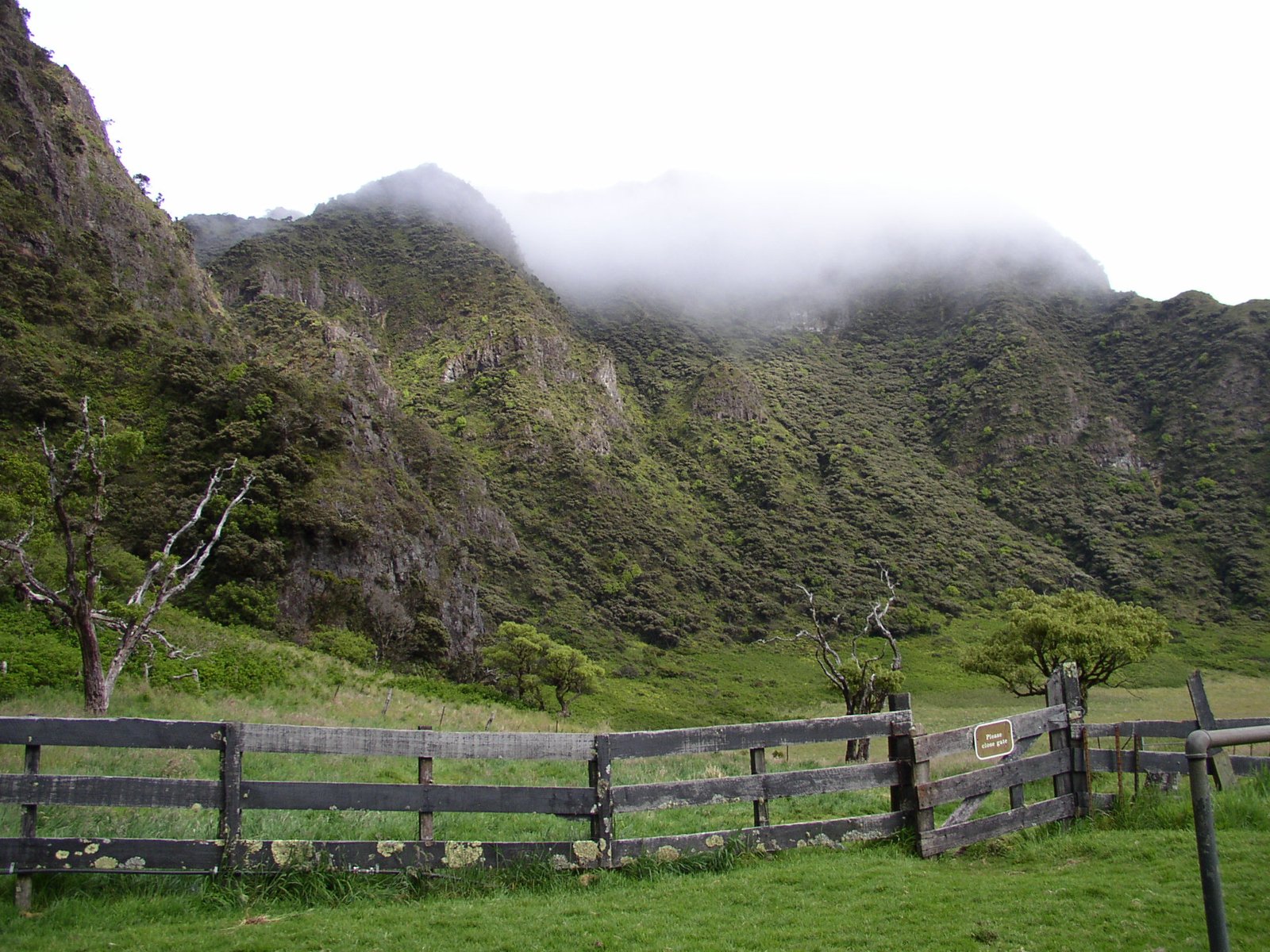
Haleakalā’s summit crater on Maui is a high, open basin of cinder cones, red and black sand, and lava flows. The National Park Service allows tent camping at two wilderness areas inside it: Hōlua, closest to the Halemauʻu trailhead, and Palikū, at the crater’s foggy eastern end. The classic backpacking trip drops in on the Keoneheʻeheʻe (Sliding Sands) Trail from the summit, crosses the crater, and climbs out on the Halemauʻu Trail, about 20 miles over two or three days.
It’s a high-altitude trip with cold nights, strong sun, and fast-changing weather.
The hike
The Hiking HI describes the traverse as a three-day, roughly 20-mile trip. Day one starts at the summit visitor center and follows Keoneheʻeheʻe down about 3,000 feet into the crater, through red sand and spatter cones. Jacob Hakim, writing for American Conservation Experience, says the descent loses more than 3,000 feet, and he describes terrain resembling “the moon or mars.”
Along the way, Hakim mentions Pele’s Paint Pot, an unofficial name for a spot of colorful oxidized cinder on Halāliʻi cinder cone. The Hiking HI passes Kapalaoa Cabin, a rest stop where camping isn’t allowed, before the landscape changes to black lava and green plants near Palikū. NPS puts Palikū 9.3 miles from the trailhead via Keoneheʻeheʻe; The Hiking HI measured 9.8. Recreation.gov describes Palikū, at 6,380 feet, as sitting at the base of a rain-forest cliff where clouds and fog often roll over, “exceptionally cool and lush.”
On day two, The Hiking HI heads about 6.3 miles back west to Hōlua, past ʻōhelo berries, the pit Hakim calls Kawilinau (a 65-foot-deep lava pit once called the Bottomless Pit), and barren spatter-cone country, with views of the Koʻolau Gap. Hakim warns about ʻaʻā lava, the sharp, broken rock that demands careful footing: “Watch your step!” Recreation.gov says Hōlua, at 6,940 feet, sits in native shrubland growing over the lava flows and makes a good base for day hikes in the crater.
Day three is the climb out. NPS puts Hōlua 3.7 miles from the Halemauʻu trailhead (The Hiking HI says 3.9), and The Hiking HI describes about 20 switchbacks and a 1,400-foot climb up the crater wall. Because the trip ends at a different trailhead, The Hiking HI suggests leaving a car at Halemauʻu before starting; the writer says hitchhiking back is common, but that isn’t an official option.
Shorter trips work too. Hōlua is an out-and-back of 3.7 miles each way via Halemauʻu, and NPS lists Hōlua at 7.4 miles via Keoneheʻeheʻe and Palikū at 10.4 via Halemauʻu. To leave the crater downhill instead, see Haleakalā via Kaupō Gap.
The Hiking HI says nēnē, the Hawaiian goose, were the only animals the writer saw in the crater, along with ʻāhinahina (silversword), a plant found nowhere else on Earth. NPS notes nēnē are protected.
For a coastal backpacking trip on the Big Island, see Hawaiʻi Volcanoes: Keauhou and Halapē.
Tips
- Pack for cold and wet. NPS gives typical temperatures of 40 to 70°F by day and 30 to 50°F at night, and says to plan for rain at any time of year. Recreation.gov warns that storms can bring winds over 80 mph and below-freezing temperatures.
- Carry water. The spigots are non-potable and must be treated; in drought, NPS says all water must be carried in.
- Bring sun protection. Hakim calls the trail “totally exposed.”
- Watch your footing on ʻaʻā. It’s sharp and uneven.
- Plan a shuttle. The traverse ends at a different trailhead.
- Acclimate. The Hiking HI suggests a night at Hosmer Grove first to adjust to the altitude.
Camping
NPS issues wilderness tent permits only on Recreation.gov: “No in-person permit reservation or pick up is available,” and you must carry a printed reservation. Each area has four individual sites (up to 5 people and 2 tents) and one group site (up to 10 people and 4 tents), per Recreation.gov. Stays are limited to three consecutive nights, and all overnight camping is limited to three nights per 30-day period. A tent permit doesn’t give access to the wilderness cabins, which are reserved separately. Each tent area has a pit toilet and a non-potable spigot outside the nearby cabin. Pets aren’t allowed on the trails, and entering caves is prohibited.
Inside Intel: The Hiking HI compares the two camps. Palikū is more established, with water close to the tents, but it’s popular, so you may share space. Hōlua’s tent sites are uphill from the cabin and the water, so plan for trips up and down, but the writer favors it for its views toward the Koʻolau Gap, its fewer crowds, and its stargazing. Hakim says the Hōlua ranger cabin gave afternoon shade, and that the night sky was “clear and totally silent.”
Trail facts
- Distance: About 20 miles point to point (Keoneheʻeheʻe to Palikū, Palikū to Hōlua, Hōlua to Halemauʻu)
- Route type: Point-to-point; out-and-back to either camp also works
- Difficulty: Strenuous; high elevation and exposed
- Elevation: About 3,000-foot descent on Keoneheʻeheʻe; about 1,400-foot climb out on Halemauʻu (The Hiking HI). Hōlua is at 6,940 feet and Palikū at 6,380 (NPS).
- Campsites: Palikū (9.3 to 9.8 miles via Keoneheʻeheʻe); Hōlua (3.7 to 3.9 miles via Halemauʻu)
- Water: Non-potable spigots at the cabins; treat it, and carry all water in drought
- Permits: NPS wilderness tent permit, Recreation.gov only; 3-night limit
- Dogs: Not allowed on trails
- Trailheads: Keoneheʻeheʻe at the summit visitor center; Halemauʻu trailhead
- Last verified: October 6, 2026
Where this comes from
This page draws on the sources below, along with other guides and trip reports. Links go to the original pages.
- National Park Service: Haleakalā wilderness camping
- Recreation.gov: Haleakalā Wilderness Tent Permit
- National Park Service: Haleakalā alerts and conditions
- Maui Now: Haleakalā reopens after Nolo
- The Hiking HI: Haleakalā Crater Backpacking
- American Conservation Experience: Three Days in the Crater
Before you go: This page is based on published trail guides, trip reports, and reviews, along with official park and agency information where we could find it. It’s meant to help backpackers discover new trails, not to replace current, official information. Conditions, closures, permits, campsites, and water sources change, and some details here may be out of date or wrong. Confirm everything with the managing agency and check current conditions before you head out, and don’t rely on this page alone for safety or navigation. Backcountry travel involves risk.