
Trails / California / Sierra Nevada
Mount Whitney Trail (Overnight)
Mount Whitney Zone, John Muir Wilderness, Inyo National Forest (Whitney Portal, west of Lone Pine)
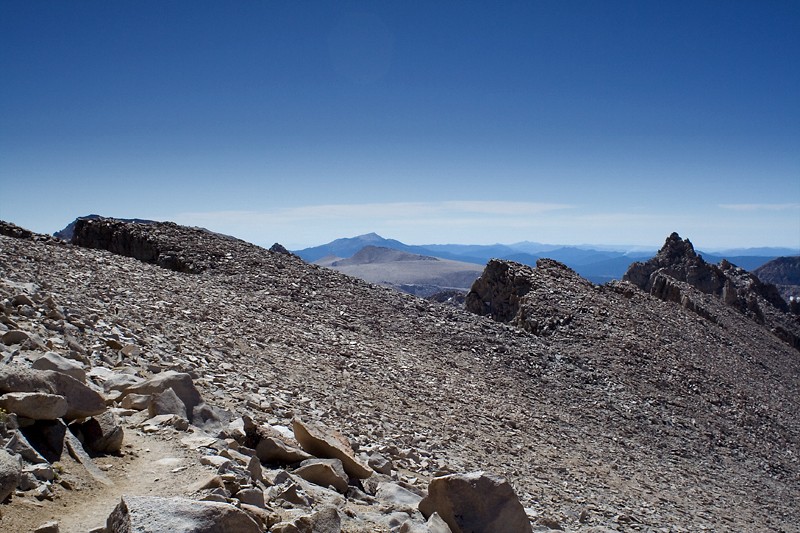
The Mount Whitney Trail climbs from Whitney Portal to the summit of Mount Whitney, at 14,505 feet the highest point in the contiguous United States. Most people who backpack it spread the climb over two or three days, camping at Outpost Camp or Trail Camp on the way up. Wikipedia says the original pack trail to the summit, designed by local engineer Gustave Marsh, opened on July 22, 1904, and formed the basis for most of today’s route.
Permits come from a lottery, and the altitude adds to the challenge.
The hike
The trail starts at Whitney Portal, which Wikipedia puts at 8,360 feet. Recreation.gov warns of a high level of bear activity there. All food and scented items must come out of vehicles and go into the bear-proof lockers in the parking areas.
Wikipedia says the stretch of trail from above Lone Pine Lake to Trail Crest lies within the special Mount Whitney Zone, where permits are required even for day hikes. Noah Lang describes the trail crossing into the permit zone just past Lone Pine Lake, and notes that you still need an overnight permit to camp at the lake itself.
Recreation.gov lists the popular overnight stops: Lone Pine Lake around 10,000 feet, Outpost Camp around 10,500, Consultation Lake around 11,000, and Trail Camp around 12,000. Wikipedia places Outpost Camp 3.8 miles from Whitney Portal at 10,365 feet. Permit Snag puts Trail Camp at about 6 miles and 12,039 feet, and calls it the main overnight camp.
Trail Camp sits above treeline. Noah Lang points to that as one reason the Forest Service requires overnight campers to store food in bear canisters. Wikipedia says the Forest Service removed the solar latrines at Outpost Camp and Trail Camp and began issuing WAG bags for human waste instead.
Permit Snag puts the total elevation gain from the portal to the summit at about 6,656 feet. Campflare says overnight groups are limited to 15 people, and Eastside Sports reminds hikers that they must start on the exact date and trail on their permit. Wikipedia notes that the Whitney permit lottery has moved from mail-in applications to an online system. Recreation.gov adds that a day-use permit can’t be combined with other permits to pass through or exit the Whitney Zone.
From Trail Camp, the trail climbs toward Trail Crest and the summit ridge. Permit Snag says camping at Trail Camp breaks the 22-mile push into two manageable days and helps with acclimatization. Recreation.gov notes that an overnight permit can cover multiple nights and can exit at other locations, like the John Muir Trail toward Yosemite.
The permit lottery runs every winter. She Dreams of Alpine says the 2026 lottery was open from February 1 to March 1. Recreation.gov says results post on March 15, awarded reservations must be claimed by April 21, and unclaimed dates open on April 22. Campflare says off-season permits, from November 2 to April 30, are first come, first served.
Wikipedia says bear canisters can be rented at the Interagency Visitor Center south of Lone Pine or at the Whitney Portal Store. It also says black bears are common along the trail.
For an easier Eastern Sierra overnight, see Big Pine Lakes.
Tips
- Enter the lottery in February. The 2026 lottery ran February 1 to March 1.
- Confirm your permit by 10 a.m. on entry day. Recreation.gov says unconfirmed overnight permits are released.
- Carry a bear canister. Required for overnight trips.
- Use WAG bags. Everyone on the trail must pack out human waste; bags are given out with permits.
- Acclimatize. Permit Snag says camping at Trail Camp helps with acclimatization.
Camping
An overnight Mt. Whitney permit is required for camping on the trail, reserved through the Recreation.gov lottery during quota season. Eastside Sports says camping is only allowed in designated areas like Trail Camp and Outpost Camp. Bear canisters are required for overnight trips, and WAG bags are required for all Whitney Zone visitors. She Dreams of Alpine says used WAG bags go in the disposal box at the Whitney Portal trailhead near the restrooms.
Inside Intel: Trail Camp is the classic choice for an overnight summit trip. Permit Snag calls it the main overnight camp and says it splits the climb into two manageable days while helping you adjust to the altitude. Noah Lang adds that bear activity is very high at Whitney Portal, and that the Forest Service asks hikers to label anything they leave in the lockers with a name and date.
Trail facts
- Distance: About 22 miles round trip
- Route type: Out and back
- Difficulty: Very strenuous. Summit at 14,505 feet.
- Elevation: Whitney Portal 8,360 feet; Outpost Camp 10,365; Trail Camp 12,039; summit 14,505
- Campsites: Lone Pine Lake, Outpost Camp, Consultation Lake, Trail Camp
- Water: Lakes and streams along the trail. Treat all water.
- Permits: Lottery-based overnight permit (quota season May 1 to November 1)
- Bear and food storage: Bear canister required; use lockers at Whitney Portal
- Human waste: WAG bags required
- Trailhead: Whitney Portal, west of Lone Pine
- Last verified: October 2, 2026
Where this comes from
This page draws on the sources below, along with other guides and trip reports. Links go to the original pages.
- Recreation.gov: Mt. Whitney, Inyo National Forest
- Wikipedia: Mount Whitney Trail
- Noah Lang: Hiking the Mt. Whitney Trail
- She Dreams of Alpine: Mt. Whitney permits 2026
- Permit Snag: How to Get a Mount Whitney Permit
- Eastside Sports: Mt. Whitney Permits Explained
- Campflare: Mt. Whitney permits
Before you go: This page is based on published trail guides, trip reports, and reviews, along with official park and agency information where we could find it. It’s meant to help backpackers discover new trails, not to replace current, official information. Conditions, closures, permits, campsites, and water sources change, and some details here may be out of date or wrong. Confirm everything with the managing agency and check current conditions before you head out, and don’t rely on this page alone for safety or navigation. Backcountry travel involves risk.