
Trails / California / Southern California
Boy Scout Trail (Joshua Tree National Park)
Joshua Tree National Park, National Park Service (Keys West Backcountry Board to Indian Cove)
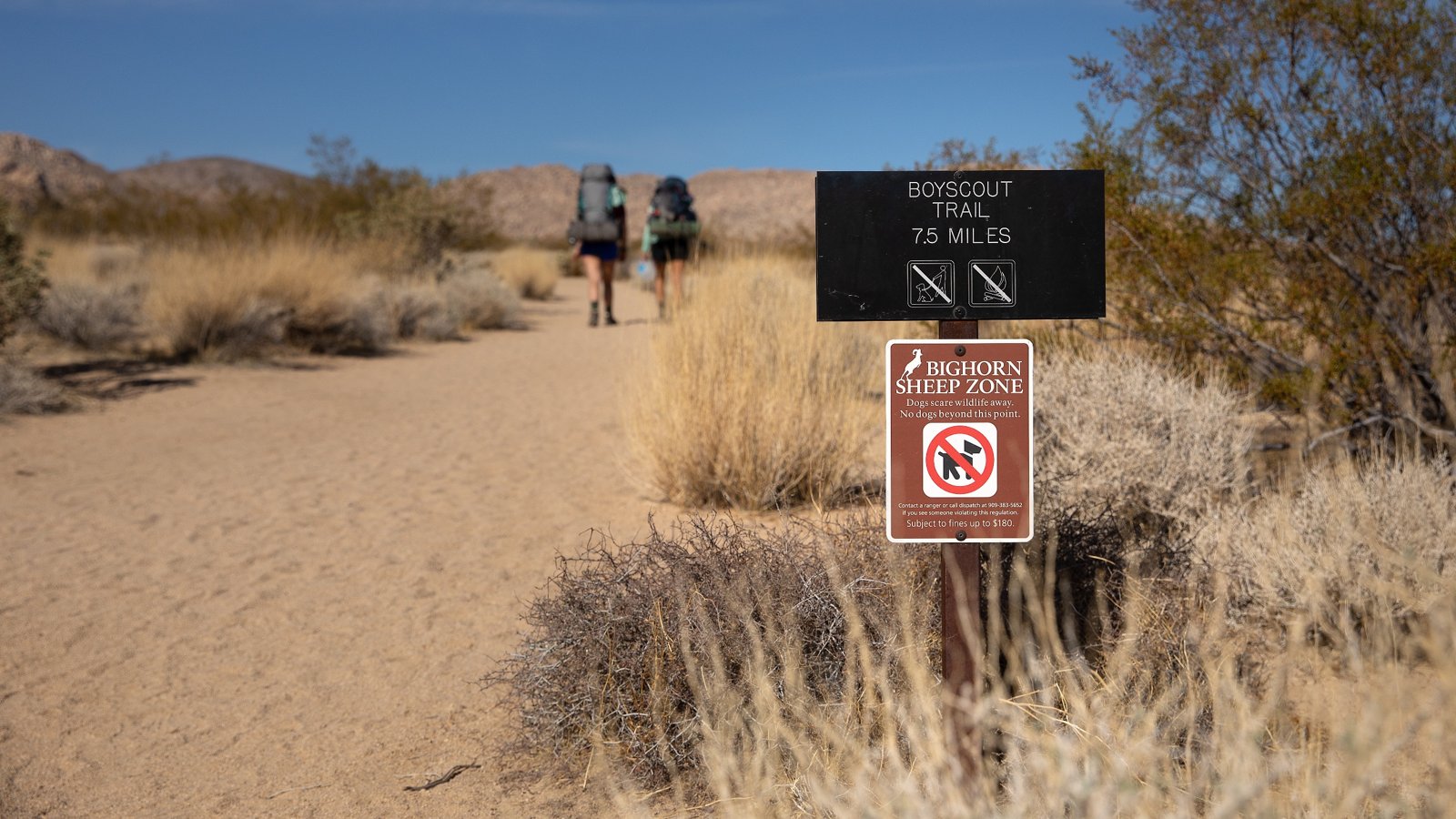
The Boy Scout Trail crosses the western side of Joshua Tree National Park, from Joshua tree forest near Park Boulevard down past the edge of the Wonderland of Rocks to Indian Cove on the park’s north edge. Hiking Guy describes it dropping about 1,000 feet through three of the park’s ecosystems. It’s about 8 miles one way, and A Rambling Unicorn calls it one of the most popular hikes in the park.
There’s no water along the way, and you have to camp at a reserved designated site.
The hike
Most hikers start at the south end. AllTrails says most prefer the south trailhead for a mostly downhill trip. The NPS says the Keys West Backcountry Board sits at the upper, south end of the Boy Scout Trail along Park Boulevard, with parking, a vault toilet, and trash cans. Hiking Guy says the Keys West lot is one of the biggest trailhead lots in the park but does fill up at popular times, and that there’s no water there.
From the start, Hiking Guy describes several side trails branching to climbing areas and advises staying straight on the main trail. AllTrails warns that the trail travels deep into the Wonderland of Rocks, and that even though the boulders are tempting, you should stay on the trail to avoid getting lost. Outdoor SoCal and AllTrails both note that the Wonderland of Rocks, bordering the trail to the west, is a day-use area where overnight camping isn’t allowed.
Outbound describes the scenery shifting from widespread Joshua tree forest to rocky, Mars-like terrain. A Rambling Unicorn says the trail is fairly flat for the last couple of miles, with big rock formations in the distance marking Indian Cove. The same writer camped around the 3.5-mile mark and found flat ground harder to come by farther into the rocks.
The trail ends at the Indian Cove Trailhead. Hiking Guy notes a sign near the end for the campground and entrance station, and suggests walking down the road to the ranger station if you need to refill water. Recreation.gov also lists potable water at Cottonwood Campground, park headquarters, the Joshua Tree Visitor Center, and Black Rock Nature Center. Visit 29 says Indian Cove Campground has 101 sites and vault toilets but no water, and that water is available at the ranger station at the entrance. Outdoor SoCal puts Indian Cove at about 2,800 feet, compared with about 4,000 feet at the Keys West end.
The permit system has changed. Recreation.gov says the Boy Scout Trail is the only zone in the park that requires camping in designated sites, and backpackers must camp in one of 14. AllTrails says self-registration permits are no longer allowed and that in-person same-day permits are available until 4 p.m. at the permit office. Older guides describe self-registering at the backcountry boards; those instructions appear out of date for this trail.
One AllTrails reviewer cached water at the southern end before an overnight and described the trail as well maintained and hard to get lost on, with about 1,500 feet of gain if you start from Indian Cove.
For another Southern California backpacking trip, see San Jacinto via Round Valley.
Tips
- Reserve a designated site. Recreation.gov says backpackers on this trail must camp in one of 14 designated campsites.
- Carry all your water. There’s none on the trail; refill at the Indian Cove ranger station.
- Start at Keys West for a mostly downhill hike. AllTrails says most hikers do.
- Stay out of the Wonderland of Rocks overnight. It’s day use only.
- Arrange a shuttle. The trail is point to point between Keys West and Indian Cove.
Camping
Backpackers on the Boy Scout Trail must camp in one of 14 designated campsites, reserved through Recreation.gov, according to the park’s permit page. Recreation.gov says camping in or near rock shelters or in day-use-only areas is strictly prohibited, and asks backpackers to carry or cache all the water they plan to use. The Dyrt notes that pets aren’t allowed. Indian Cove Campground, at the north end, takes reservations October through May, per Visit 29.
Inside Intel: With designated sites now required, the main choice is which one to reserve. A Rambling Unicorn camped around mile 3.5 before the trail enters the boulder country, where flat ground gets scarce. Recreation.gov warns that sites along the Boy Scout Trail are limited and likely to be competitive, so book early for popular weekends.
Trail facts
- Distance: About 8 miles one way
- Route type: Point to point, usually south to north; or out and back
- Difficulty: Moderate. About 1,000 to 1,500 feet of elevation change.
- Elevation: About 4,000 feet at Keys West to about 2,800 at Indian Cove (Outdoor SoCal)
- Campsites: 14 designated sites (reservation required)
- Water: None on the trail. Refill at the Indian Cove ranger station or West Entrance.
- Permits: Backcountry permit via Recreation.gov
- Pets: Not allowed (The Dyrt)
- Trailheads: Keys West Backcountry Board (south, Park Boulevard); Indian Cove (north)
- Last verified: October 2, 2026
Where this comes from
This page draws on the sources below, along with other guides and trip reports. Links go to the original pages.
- Recreation.gov: Joshua Tree National Park Wilderness Backpacking Permits
- National Park Service: Keys West Wilderness Backpacking Board
- Hiking Guy: Boy Scout Trail
- AllTrails: Boy Scout Trail
- Outdoor SoCal: Boy Scout Trail
- A Rambling Unicorn: Backpacking Boy Scout Trail
- The Dyrt: Boy Scout Trail Backcountry Sites
- Visit 29: Indian Cove
Before you go: This page is based on published trail guides, trip reports, and reviews, along with official park and agency information where we could find it. It’s meant to help backpackers discover new trails, not to replace current, official information. Conditions, closures, permits, campsites, and water sources change, and some details here may be out of date or wrong. Confirm everything with the managing agency and check current conditions before you head out, and don’t rely on this page alone for safety or navigation. Backcountry travel involves risk.