
Five Backpacks Backpackers Love, and Who Should Skip the Frame
A frameless pack is tempting, but it only works under a certain load. Here's where that line falls, and five tester favorites on either side of it.
This post contains affiliate links. If you buy through them, we may earn a commission at no extra cost to you. As an Amazon Associate we earn from qualifying purchases.
Your pack is the one piece of gear that touches everything else you carry. Get it right and you forget it’s there. Get it wrong and you think about it with every step, usually somewhere around mile nine.
Ultralight frameless packs are tempting: fewer parts, fewer ounces, less to go wrong. But a frame does a real job, and there’s a load where going without one stops making sense. The section below explains where that line falls, and the five picks after it cover backpackers on both sides of it. Each comes from published tests by CleverHiker, GearJunkie and Outdoor Life. Prices change too often to list here, so check the current price before you buy.
- Best for most backpackersGranite Gear Crown3 60: CleverHiker's best crossover pack and Outdoor Life's best for beginners. Check the price on Amazon
- Best for heavy loadsGranite Gear Blaze 60: GearJunkie says it can haul 50-plus pounds comfortably. Check the price on Amazon
- Best budget pickKelty Asher 55: CleverHiker's best entry-level backpack. Check the price on Amazon
- Lightest framed pickBlack Diamond Beta Light 45: under 2 pounds with a frame, and tough enough for rough ground, per CleverHiker. Check the price on Amazon
- Best frameless pickMountainsmith Zerk 40: CleverHiker's best frameless ultralight pack. Check the price on Amazon
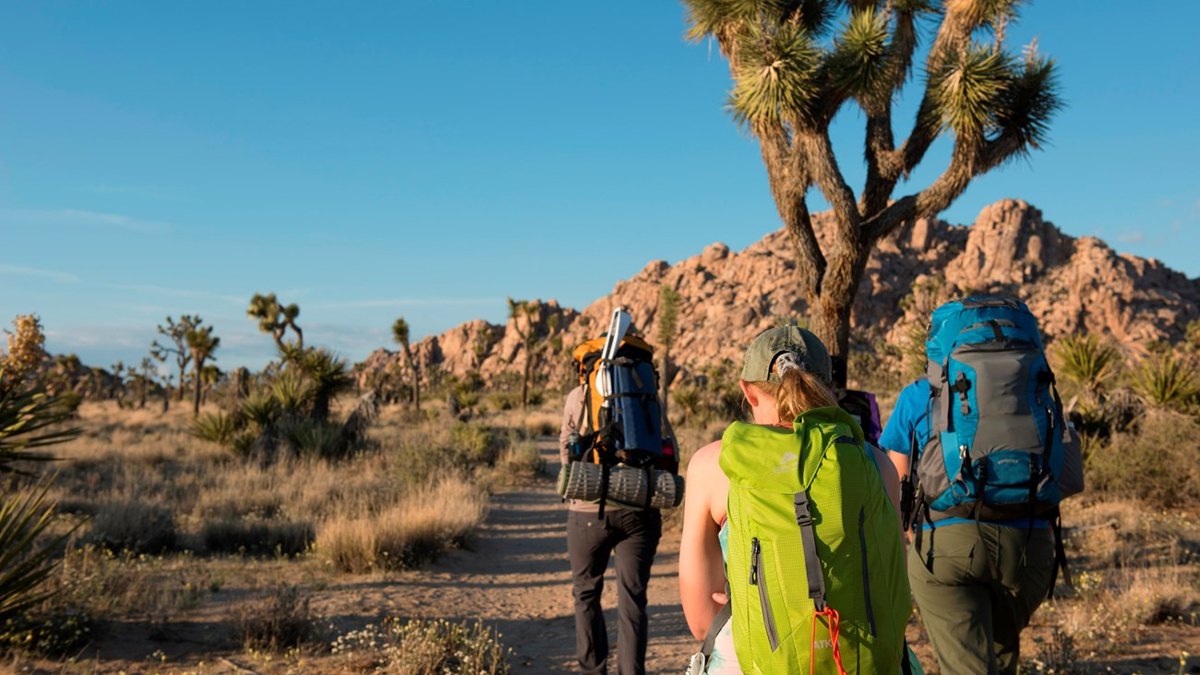
Who should skip the frame
A frame’s job is to move weight onto your hips. CleverHiker puts it plainly: “A frame transfers some of the weight to your hips,” while “A frameless pack will force all of the weight on your shoulders.” That’s fine when the load is light, and miserable when it isn’t.
Where’s the line? The sources land in roughly the same place:
- Total load around 20 to 25 pounds or less. Backpacker says frameless packs typically carry only 20 to 25 pounds comfortably. SectionHiker says they’re designed for 20 to 25 pounds or less, and that includes food, water and fuel. Garage Grown Gear suggests frameless for “sub 20-ish pounds” and a framed pack for 25-plus.
- Base weight around 12 pounds or less. CleverHiker generally recommends “framed packs for anyone with a base weight over 12 pounds,” and for base weights of 12 to 20 pounds, a lightweight pack with a higher recommended load limit. It also warns that “Overloaded ultralight packs can feel worse than heavier packs.”
That line is lower than it sounds. Backpacker points out that a gallon of water weighs about 8.4 pounds, and desert hikers may need two gallons a day. Add a few days of food and a frameless pack fills its whole comfort range before you’ve packed a tent.
Backpacker’s list of who should keep the frame is a good gut check:
- Your other gear isn’t ultralight yet. A light pack doesn’t make the rest of your kit lighter. Backpacker suggests replacing the pack last.
- You carry a lot of water. See the math above.
- You’re hiking with kids. Their extra food, clothes and first aid add up fast.
- You simply prefer more support. That’s a perfectly good reason. As Backpacker puts it, “hike your own hike first, and pick the gear that matches it.”
Nobody packs light on the first try. If you aren’t sure, a framed pack is the forgiving choice, and four of the five picks below have one.
One note on the top-rated packs: CleverHiker’s and GearJunkie’s best overall pick is the Gregory Paragon 60 (Maven 58 for women), both sites’ budget pick is the REI Co-op Flash 55, and CleverHiker’s top ultralight pack is the Hyperlite Mountain Gear Unbound 40. The reviewers link those to REI or the maker rather than Amazon, so they aren’t linked here. The picks below are tester favorites you can find on Amazon.
1. Granite Gear Crown3 60
What testers found: CleverHiker names the Crown3 60 its best crossover pack, for blending lightweight and traditional designs, with lots of lashing points and good hip-belt pockets. It weighs 2 pounds 12.5 ounces in CleverHiker’s specs, with a recommended maximum of 35 pounds. Outdoor Life gives it its Best for Beginners award, calling it light for a traditional-style pack, with a removable lid and plenty of pockets. Backpacker also suggests it for loads too heavy for a frameless pack.
The catch: CleverHiker found it uncomfortable at 35 pounds and up, with narrow shoulder straps and awkward bottle pockets. Outdoor Life’s testers found the stiff, thinly padded shoulder straps caused soreness.
Best for: Backpackers carrying moderate loads who want a lighter pack without giving up a frame.
2. Granite Gear Blaze 60
What testers found: GearJunkie calls the Blaze 60’s suspension “phenomenal” and says the pack can “haul 50+ pounds comfortably” on its stiff frame sheet. At 3 pounds in GearJunkie’s testing, it’s slightly lighter than average for its capacity. GearJunkie also singles out its ventilated back panel: “Of all the packs with breathable back panels out there, the Blaze 60 stands out.”
The catch: It takes some time to learn the strap and hip-belt adjustments. GearJunkie also found the shoulder and hip straps a bit sweaty, says the tall, narrow shape needs careful packing, and notes it still uses a PFAS-based water-repellent finish.
Best for: Backpackers who carry full, heavy loads but don’t want an ultra-bulky pack, which is who GearJunkie recommends it for.
3. Kelty Asher 55
What testers found: CleverHiker names the Kelty Asher 55 its best entry-level backpack. It found it comfortable at about 45 pounds, with a perimeter frame, a recommended maximum of 55 pounds and a budget price. It also isn’t overloaded with features, which keeps things simple for a first pack. CleverHiker lists it at 2 pounds 14.9 ounces.
The catch: CleverHiker has durability concerns. It also has no rear stuff pocket, awkward bottle pockets and a thin hip-belt pocket.
Best for: First-time backpackers and anyone carrying a heavier, older kit who wants a frame without a big bill.
4. Black Diamond Beta Light 45
What testers found: CleverHiker names it the best ultralight pack for alpine trips. It has an internal frame, weighs 1 pound 15.4 ounces in CleverHiker’s specs, and has a recommended maximum load of 40 pounds. CleverHiker’s testers say “The construction is fully waterproof” and call it “the kind of pack you don’t hesitate to drag through brush or over rock.” Outdoor Life’s testers liked its generous storage, seam-sealed interior and long load lifters.
The catch: CleverHiker says the features “don’t feel dialed yet,” it’s tricky to load efficiently, and the thin shoulder straps can create pressure points under heavier loads. Outdoor Life’s testers agreed about the straps and rated its comfort below average. CleverHiker also calls it expensive.
Best for: Experienced backpackers who move fast through rough, wet or off-trail terrain and want a frame at nearly frameless weight.
5. Mountainsmith Zerk 40
What testers found: This is the pick for backpackers who are ready to skip the frame. CleverHiker names the Zerk 40 its best frameless ultralight backpack and says it “carries loads up to 30 pounds with ease.” Its testers loved the organization: “The Zerk has a ridiculous amount of roomy, well-placed pockets.” SectionHiker includes it in its frameless pack roundup, noting its running-vest-style shoulder straps and external mesh pockets.
The catch: CleverHiker says it can’t carry heavy loads, isn’t waterproof (use a liner or dry bags) and might not fit smaller backpackers. CleverHiker also says plainly that it’s “not the right choice for beginners.”
Best for: Experienced, fast-and-light backpackers whose loads stay under the 30 pounds CleverHiker recommends.
Before you buy
- Weigh your gear first. Add up your base weight, then add food and water for your longest stretch between resupplies. That total, not the pack’s weight, decides whether you need a frame.
- Shop for the load you carry most often. A pack built for 50 pounds will feel like overkill on summer weekends, and a frameless pack will feel like a punishment on a dry, water-heavy trip.
- Check the fit. Torso length and hip-belt fit matter more than any feature list. Check the maker’s size chart, and try the pack on loaded if you can.
The bottom line
If your total load is over about 25 pounds, or your base weight is over about 12, keep the frame. For most backpackers that means a pack like the Granite Gear Crown3 60, or the Kelty Asher 55 if you’d rather spend less. If your kit is already light and your loads stay under the frameless range, the Mountainsmith Zerk 40 is the testers’ pick for leaving the frame at home.