
Don't Let One Icy Switchback End Your Trip
Five traction devices independent testers rate for icy trails, and how to tell when spikes aren't enough.
This post contains affiliate links. If you buy through them, we may earn a commission at no extra cost to you. As an Amazon Associate we earn from qualifying purchases.
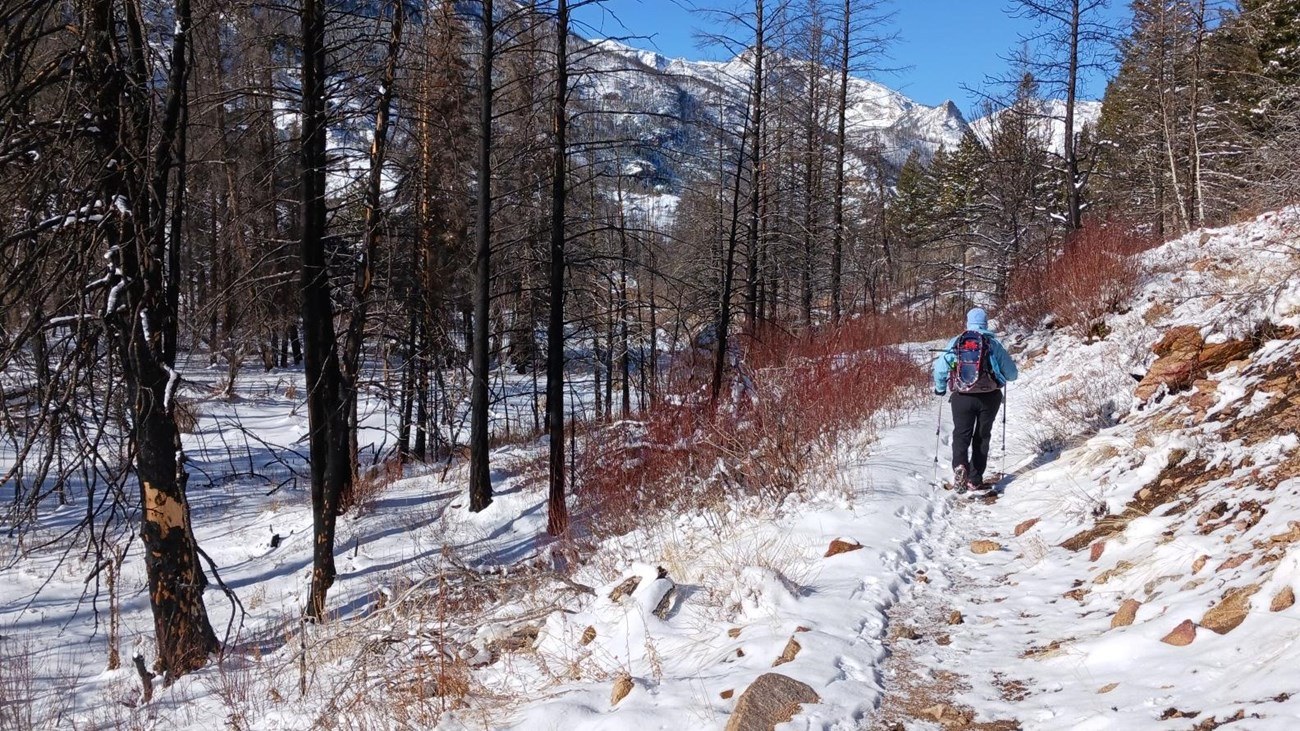
Late winter and early spring are a strange time to backpack. The trailhead is bare, the first mile is mud, and then the trail turns into the shade of a north-facing slope and becomes a sheet of ice. A pair of slip-on spikes weighs less than a liter of water and turns that stretch from a nervous shuffle into an ordinary walk.
They have limits, though. Microspikes and trail crampons are traction devices for trails, not mountaineering crampons, and on steep, hard snow they can give you more confidence than they should. The five picks below come from published tests by CleverHiker, GearJunkie, Switchback Travel and Bike Hike Safari. After them is a plain section on when an ice axe, real crampons or a turnaround is the right call. Prices change too often to list here, so check the current price before you buy.
- Best for most backpackersKahtoola MICROspikes: GearJunkie's and Switchback Travel's best overall, and CleverHiker's best hiking spikes. Check the price on Amazon
- Lighter all-rounderBlack Diamond Access Spike: CleverHiker's best ice cleats overall, at about 8.9 ounces a pair. Check the price on Amazon
- Best for long, icy winter trailsHillsound Trail Crampon: GearJunkie's best heavy-duty spikes. Check the price on Amazon
- Best for shoulder seasonKahtoola EXOspikes: CleverHiker's pick for patchy ice and thin snow. Check the price on Amazon
- Best budget pickSnowline Chainsen Light: GearJunkie's "just in case" spikes, with low cost among its pros. Check the price on Amazon
1. Kahtoola MICROspikes
What testers found: This is the pair testers keep coming back to. GearJunkie gives it its Best Overall award and its highest score, and says its testers “found no trouble gripping in any environment,” from steep, snow-packed trails to icy parking lots. The harness never shifted on long, steep hikes in the North Cascades, and the spikes held up well on rock. Switchback Travel also names it best overall, and CleverHiker calls it its best hiking spikes, with twelve 9.5 mm stainless steel spikes and a pair weight of about 11.9 ounces.
CleverHiker says the MICROspikes fit best on hiking shoes and lightweight boots. They work on trail runners but can fit loosely, and big winter boots can be a tight squeeze.
The catch: They aren’t light, and GearJunkie found them hard to put on in very cold weather. Both GearJunkie and Switchback Travel say soft, wet snow and slush ball up underfoot. CleverHiker notes there are no real front points, so they may not grip very steep icy slopes, and the heel can sag after many miles and need adjusting.
Best for: Most backpackers who want one pair for icy trails, packed snow and the sloppy weeks of spring.
2. Black Diamond Access Spike
What testers found: CleverHiker names the Access Spike its best ice cleats overall, praising its traction, secure and comfortable fit, and the included stuff sack, at about 8.9 ounces a pair. Switchback Travel says it’s lighter than the MICROspikes and more aggressive, with 14 spikes and an easy-to-use heel loop.
The catch: CleverHiker says it isn’t as heavy-duty as others and is “not made for technical mountaineering or mixed rock travel.” Switchback Travel points to a thinner build and a shorter track record for longevity. GearJunkie disagrees on grip, calling it less aggressive than higher-end options, with limited durability on rocky ground.
Best for: Backpackers who want a lighter alternative to the MICROspikes for trail ice and packed snow.
3. Hillsound Trail Crampon
What testers found: When the whole trail is ice, this is the burlier option. GearJunkie names it Best Heavy-Duty Spikes for its very secure harness and grip on technical hiking terrain. CleverHiker calls it the most aggressive hiking spikes in its test, and says it bridges “the gap between lightweight hiking spikes and true mountaineering crampons.”
The catch: It’s heavy, at 1 pound 0.3 ounces a pair in CleverHiker’s specs, takes a little longer to put on, and is overkill on dry trail. Despite the name, GearJunkie says it isn’t a technical crampon and isn’t designed for vertical terrain or alpine climbing. Hillsound sells several versions, so check which one you’re buying.
Best for: Long winter trails that are fully covered in ice and hard snow.
4. Kahtoola EXOspikes
What testers found: CleverHiker names the EXOspikes its best shoulder-season cleats: versatile, comfortable and about 7.3 ounces a pair. Its MICROspikes review describes them as less aggressive and lighter, and better for running and the in-between seasons. Bike Hike Safari picks them for mixed winter running and hiking, and likes the flexible harness.
The catch: CleverHiker says they become ineffective in more than an inch or two of fresh snow. GearJunkie scored them well below the MICROspikes and notes they aren’t the most packable, and Bike Hike Safari found the harness tricky to take off.
Best for: Fall and spring trips where you expect patches of ice, not a frozen trail from end to end.
5. Snowline Chainsen Light
What testers found: GearJunkie calls the Snowline Chainsen Light “the perfect ‘just in case’ traction for backpackers and hikers who count every ounce,” and lists low cost among its pros. Its 12 stainless steel spikes bit well into hard-packed snow and icy parking lots. At 8.6 ounces a pair, GearJunkie puts it at roughly 25% lighter than the MICROspikes, with nearly identical grip on packed snow.
The catch: The thinner chains and shorter spikes are less aggressive on steep ice, and GearJunkie warns that “they will wear faster on mixed rock and gravel.” For a cheaper option still, GearJunkie’s budget award went to Cimkiz Ice Cleats, which it says aren’t suitable for steep or technical terrain.
Best for: Carrying on trips where ice is possible but not certain.
When spikes aren’t enough
Every device above is built for trails. None of them turns a steep snow slope into a safe one.
- Know the terrain they’re for. SectionHiker says microspikes are best on “fairly level hiking trails covered with packed snow or ice,” and that steeper, icier ground calls for crampons. New Zealand’s Mountain Safety Council says microspikes are “not adequate for steep or technical terrain, where a slip could have serious consequences.”
- Steeper ground means different gear and skills. Switchback Travel recommends dedicated crampons for any ascent that involves an ice axe. The Mountain Safety Council says crampons need compatible, stiff footwear and that “an ice axe is essential” with them. It recommends a course to learn self-arrest with an axe, then practice on low-consequence slopes. An ice axe you haven’t practiced with is mostly extra weight.
- Deep snow is a different problem. Bike Hike Safari points out that microspikes aren’t snowshoes. In fresh powder, you need flotation, not spikes.
- Turning around is a skill too. The NPS puts it simply: “Always be willing to turn around,” because trail conditions change quickly as snow falls and melts. A 2016 report in the American Alpine Club’s Accidents in North American Climbing describes a hiker in microspikes who slid on icy rock in the Adirondacks; the group’s leader broke his leg trying to stop the fall. The leader wrote that he “should have turned him around when it became apparent that Microspikes were inadequate for the conditions.”
This is general advice, not training. Conditions and rules vary by area, so check the land manager’s current trail conditions before you go. On most icy trail miles, spikes are the right tool. The skill is noticing when the trail has stopped being one of those miles.
Before you buy
- Size them to your footwear. Try them with the shoes or boots you’ll actually wear, and check the maker’s size chart.
- Put them on when you need them. SectionHiker’s advice is to wear them only when conditions call for it, since extra weight on your feet adds up over a long day.
- Coils aren’t spikes. Yaktrax Walk is Switchback Travel’s and CleverHiker’s budget pick for walking, but CleverHiker says the coils “don’t bite into steep or hard ice the way spiked cleats do,” and Bike Hike Safari’s author had a pair fail within the first hour on Mount Whitney. They’re fine for icy sidewalks; for backpacking, pick spikes.
The bottom line
For most backpackers, the Kahtoola MICROspikes are the safe choice: all four tests here name them best overall or best for hiking. If you’d rather carry less, the Snowline Chainsen Light costs less and weighs less, with less bite on steep ice. Whatever you choose, it’s trail traction. When the slope steepens past what spikes can handle, an ice axe you know how to use, real crampons or a turnaround is the right call.