
Trails / Hawaii / Hawaiʻi Island
Mauna Loa Summit Cabin via the Observatory Trail
Hawaiʻi Volcanoes National Park, Mauna Loa summit (reached from Mauna Loa Observatory Road off Highway 200, Hawaiʻi Island)
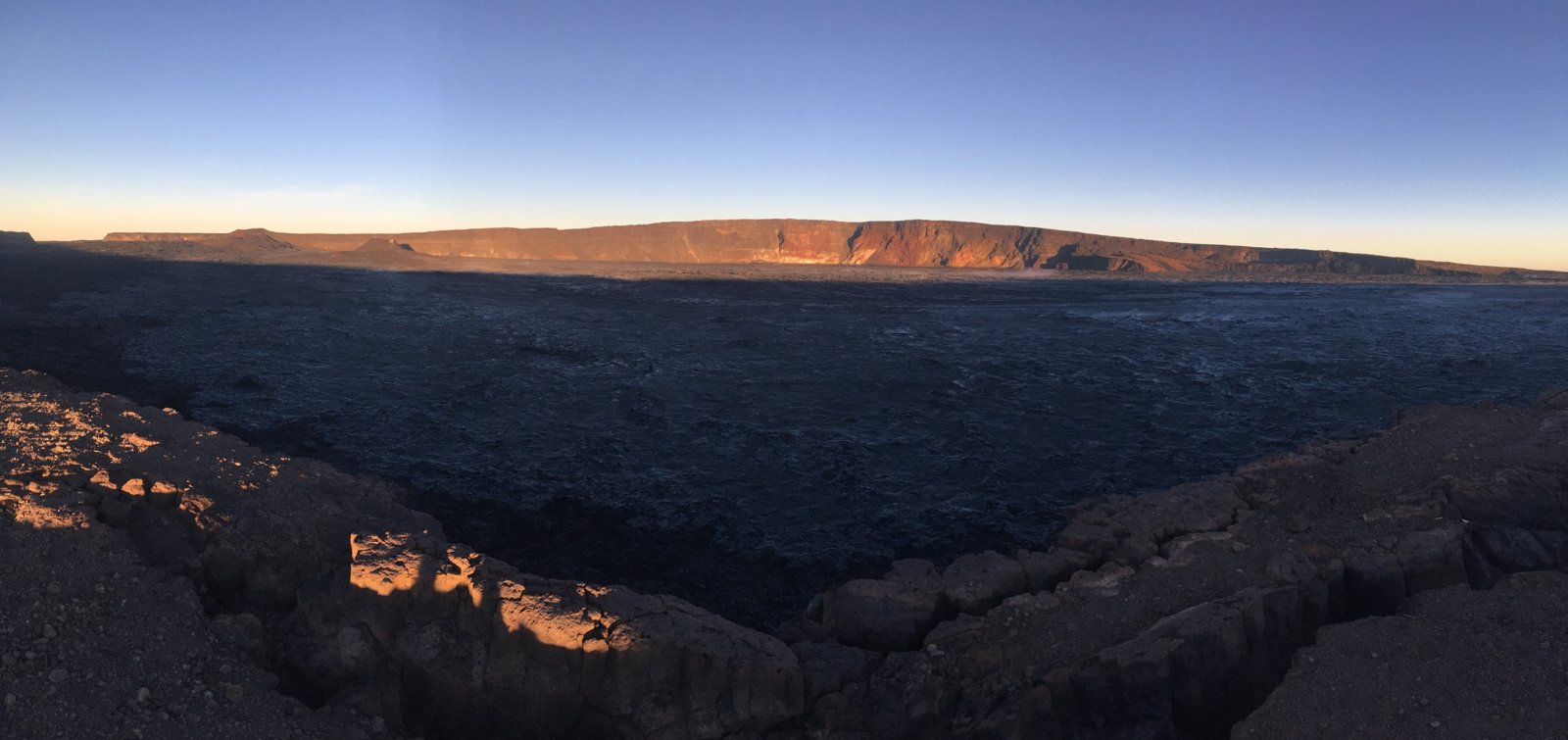
Mauna Loa’s summit cabin sits at 13,250 feet on the edge of Mokuʻāweoweo, the summit caldera, across from the true summit. Since the 2022 eruption buried long stretches of the Mauna Loa Trail, the National Park Service says the cabin is reached from the Observatory Trail, which starts above 11,000 feet.
The altitude is the main challenge. NPS says altitude sickness is common, and the only cure is to descend.
The hike
NPS says the Observatory Trail starts on Mauna Loa Observatory Road near Highway 200, the Saddle Road, and calls the road narrow, paved, and one lane: “Drive with caution.” Big Island Hikes says the road runs 17.5 miles from Saddle Road and is “sometimes one-lane,” and that fog is common enough that a guide line was painted on it. NPS says the trailhead is about a two-hour drive from the Kīlauea Visitor Center. The observatory itself isn’t open to the public.
Big Island Hikes puts the trailhead at 11,030 feet; SummitPost says 11,140. NPS gives 5.9 miles from the observatory to the summit cabin and 6.4 miles to the true summit. SummitPost describes the trail climbing 3.8 miles to a junction near the caldera, where the right fork goes 2.5 miles to the summit and the left fork goes 2.1 miles to the cabin.
Big Island Hikes lists landmarks along the way: a large collapsed lava tube at about mile 1, marked by two enormous cairns; the national park boundary at about 1.5 miles; and the caldera rim around mile 4. NPS warns of deep earth cracks, uneven and unstable ground, and razor-sharp lava.
The 2022 eruption reshaped the summit. In 2023, NPS said lava covered the floor of Mokuʻāweoweo and about four miles of the Mauna Loa Trail in eight places, with flows from a few feet to almost 70 feet thick. The Mauna Loa Trail remains closed above Red Hill Cabin, so the classic route up from Mauna Loa Road no longer reaches the summit. The other way up is the state-managed ʻĀinapō Trail, which NPS describes as extremely grueling.
SummitPost says the cabin sits “at the edge of Moku’aweoweo Caldera, directly across from the actual summit.” Alisa Schreier, who reached it in 2015 by the old route, wrote in a hike journal on the park’s site that the final stretch had “extremely challenging footing” and called it “the longest mile in Hawaii.”
Weather can turn fast. NPS says to be ready for severe winter conditions, with snow or driving rain possible at any time. SummitPost gives average lows of 33 to 39°F at the trailhead and says the summit runs about 10 degrees colder. Don Chell, writing about a 2007 trip up the Mauna Loa Trail, said he “could hardly breathe” at 13,000 feet and felt better after descending to 12,000.
For a lower, warmer trip in the same park, see Nāpau Crater.
Tips
- Respect the altitude. NPS says altitude sickness is common; descend if symptoms appear.
- Pack for winter. Snow, driving rain, and freezing nights can happen any time of year.
- Treat the water. The cabin’s catchment water must be treated before drinking.
- Check the road. Observatory Road was cut by lava in 2022 and restored in 2026; confirm access before you drive up.
- Watch for fog. Big Island Hikes says it’s common on the road.
- Bring sturdy boots. NPS warns of cracks and razor-sharp lava.
Camping
NPS says all overnight hikers must register, and all backcountry sites in Hawaiʻi Volcanoes, including the Mauna Loa cabins, require a permit. The park’s backcountry page says permits are reserved on Recreation.gov up to 90 days ahead and then picked up in person at the Backcountry Office up to seven days before the trip, with a safety briefing. Stays are limited to three consecutive nights per site. NPS lists 12 bunks, a pit toilet, and a water catchment tank at the summit cabin, and says to treat all water. Open fires and smoking are prohibited in the backcountry.
Inside Intel: Schreier says the cabin’s spot “just opposite the Mauna Loa summit” gave her a view of “the full extent of the caldera” at sunset. Plan to arrive with daylight to spare: she reached the cabin as the sun was setting, after the hardest footing of the trip. Her trip predates the 2022 lava, so the view across the caldera has changed since then.
Trail facts
- Distance: 5.9 miles one way to the summit cabin (about 12 round trip); 6.4 miles to the true summit (NPS)
- Route type: Out-and-back
- Difficulty: Strenuous; very high altitude
- Elevation: Trailhead at about 11,030 to 11,140 feet; cabin at 13,250 feet; summit at 13,681 feet (NPS)
- Campsites: Mauna Loa Summit Cabin (12 bunks, pit toilet)
- Water: Roof catchment tank at the cabin; treat it
- Permits: NPS backcountry permit (Recreation.gov) plus in-person check-in; 3-night limit
- Fires: Prohibited
- Trailhead: Mauna Loa Observatory Trail, end of Mauna Loa Observatory Road off Highway 200
- Last verified: October 6, 2026
Where this comes from
This page draws on the sources below, along with other guides and trip reports. Links go to the original pages.
- National Park Service: Mauna Loa
- National Park Service: Mauna Loa Observatory Trailhead
- National Park Service: Mauna Loa Summit Cabin reopens (2023)
- National Park Service: Most of park reopens (Aug. 28, 2026)
- National Park Service: Post-Nolo reopening (Sept. 27, 2026)
- Big Island Video News: Mauna Loa Observatory road restored
- Big Island Hikes: Mauna Loa
- SummitPost: Mauna Loa
- NPS hike journal: Mauna Loa Trail, Summer 2015
- NPS hike journal: Mauna Loa, Don Chell (2007)
Before you go: This page is based on published trail guides, trip reports, and reviews, along with official park and agency information where we could find it. It’s meant to help backpackers discover new trails, not to replace current, official information. Conditions, closures, permits, campsites, and water sources change, and some details here may be out of date or wrong. Confirm everything with the managing agency and check current conditions before you head out, and don’t rely on this page alone for safety or navigation. Backcountry travel involves risk.