
Kalalau Trail (Kēʻē Beach to Kalalau Beach)
Nāpali Coast State Wilderness Park and Hāʻena State Park, Hawaiʻi State Parks (north shore of Kauaʻi)
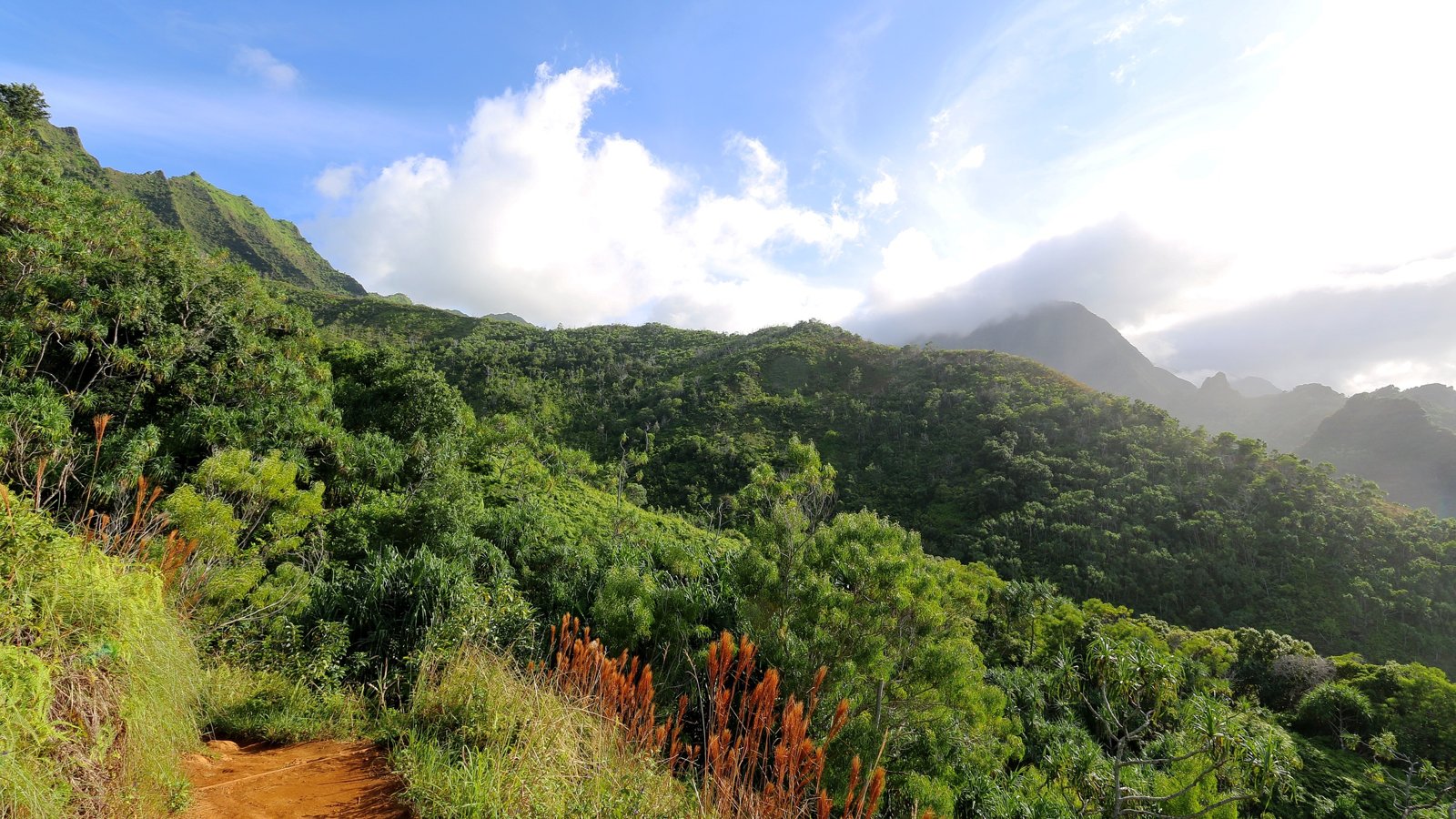
The Kalalau Trail runs along Kauaʻi’s Nāpali Coast. Hawaiʻi State Parks calls it one of the world’s adventurous hiking routes, built in the late 1800s and crossing five valleys on its way past towering sea cliffs to Kalalau Beach, 11 miles from the road. Backpackers camp behind the beach or at Hanakoa, about halfway.
The trail is closed right now. Hurricane Lowell passed Kauaʻi on Sept. 7-8, 2026, and the state says Kauaʻi camping and nearly all Kauaʻi state parks, including Hāʻena, remain closed with no reopening date. This page describes the trip for when it reopens.
The hike
The trail starts at Kēʻē Beach in Hāʻena State Park, at the end of the road on Kauaʻi’s north shore. Hawaiʻi State Parks says the first half mile has coastal views, and that the trail reaches Hanakāpīʻai’s summer sand beach at mile 2. The park is blunt about the beach: “DROWNINGS OCCUR HERE REGULARLY,” because of rip currents and treacherous surf. Wikipedia says more than 100 people have died swimming on the trail’s remote beaches. From Hanakāpīʻai, a side trail runs 2 miles up the valley to Hanakāpīʻai Falls, with flash-flood and falling-rock risk, according to the state.
Past Hanakāpīʻai, a camping permit is required. The state says the trail climbs 800 feet in steep switchbacks through the Hono o Nā Pali Natural Area Reserve, then passes the small hanging valleys of Hoʻolulu and Waiahuakua. Wikipedia describes this climb, from sea level to 800 feet in about a mile and a quarter, as the most challenging section.
Hanakoa Valley comes next, about 6 miles in by the state’s count (The Mountaineers says about 5.5). Hawaiʻi State Parks describes a hanging valley with restored Hawaiian agricultural terraces, a composting toilet, and two roofed shelters near Hanakoa Stream. Wikipedia notes that the side trail to Hanakoa Falls is not well maintained and can be hard to follow.
The last 5 miles are drier, with little shade, and the state warns of narrow sections with severe drop-offs to the ocean. The best known is Crawler’s Ledge, around mile 7 per The Mountaineers, which says the route isn’t technical but follows cliff edges and needs extra care when wet. Hawaii Guide says some hikers have crawled across it on hands and knees.
The trail crosses Kalalau Stream near the valley mouth and ends at Kalalau Beach, which has a small waterfall at one end. From the beach, a 2-mile trail leads into Kalalau Valley through ancient taro terraces, according to the state. Hawaii Guide says the valley was once home to more than 6,000 people and is a major archaeological site, and that cattle grazing in the early 1900s destroyed many of its rock walls and irrigation works. Hawaiʻi State Parks says the trail follows traditional Hawaiian routes, with taro terraces in several valleys.
The full trip is 22 miles round trip. The state lists 800 feet of elevation gain, which is the big climb; The Mountaineers, counting every ridge and valley, estimates about 10,000 feet of gain and loss round trip and suggests splitting each direction into two days.
The state also allows kayak landings at Kalalau Beach from May 15 through Sept. 7 only. For another Kauaʻi backpacking trip, see Waimea Canyon and the Kukui Trail, which is also closed after the hurricane.
Tips
- Check the closure first. Kauaʻi camping is closed after Hurricane Lowell; watch the Hawaiʻi State Parks notices page.
- Stay out of the ocean at Hanakāpīʻai. The state says drownings happen there regularly.
- Don’t cross flooded streams. Hawaii Guide says not to cross Hanakāpīʻai Stream at all when it’s high; Wikipedia says a 2013 flash flood stranded 54 hikers.
- Treat your water. The state says to bring purification tablets or a filter; there’s no drinking water on the trail.
- Take it slow on the ledges. Crawler’s Ledge and other narrow sections are worse when wet.
- Plan parking with the permit. Overnight parking at Hāʻena is limited to Kalalau campers and is reserved separately through GoHaena, per the state.
Camping
A state camping permit is required to go past Hanakāpīʻai, even on a day hike. Hawaiʻi State Parks’ special rules say permits are issued for Kalalau and are also valid at Hanakoa, the only two authorized camping areas on the trail. The stay limit is 5 consecutive nights, and no two consecutive nights may be spent at Hanakoa. Permits can be reserved 90 days ahead, and the state’s Nāpali page says they often sell out months in advance. A valid Nāpali camping permit covers entry to Hāʻena State Park; parking is separate. Open fires are prohibited, and the state asks campers not to take apart rock walls to build shelters or fire rings or to camp on helicopter landing pads.
At Kalalau, the state says camping is allowed only behind the sand beach, with shaded sites under trees. Sea caves past the waterfall are used as shelters in summer, but winter surf strips the sand and washes into them. The state warns not to linger beneath the waterfall or near cliff faces because of falling rocks. Composting toilets are at Hanakāpīʻai, Hanakoa, and Kalalau. The Mountaineers says wild boars visit Hanakoa, so store food away from your tent.
Inside Intel: In a 2014 trip report, Nicole Wasko and her partner camped “at the far side” of the Kalalau campground in an open spot. She called the waterfall at the far end of the beach the closest fresh water to camp and “a nice place to shower off the grim of the trail,” and they boiled what they collected. Treat any water, and heed the state’s falling-rock warning near the falls. At Hanakoa, Hawaii Guide says its writers prefer the campsites on the Kalalau side of the stream.
Trail facts
- Distance: 11 miles one way; 22 miles round trip
- Route type: Out-and-back
- Difficulty: Strenuous, with exposed narrow sections
- Elevation: 800-foot climb above Hanakāpīʻai (state); about 10,000 feet of gain and loss round trip (The Mountaineers)
- Campsites: Hanakoa (about mile 5.5 to 6; no two nights in a row) and Kalalau Beach (mile 11; camp only behind the beach)
- Water: Streams and the Kalalau waterfall; treat all water. Don’t cross streams in flood.
- Permits: State camping permit required past Hanakāpīʻai; 5-night maximum; reserve up to 90 days ahead
- Food storage: Keep food away from tents (wild boars at Hanakoa, per The Mountaineers)
- Fires: Prohibited
- Trailhead: Kēʻē Beach, Hāʻena State Park
- Last verified: October 6, 2026
Where this comes from
This page draws on the sources below, along with other guides and trip reports. Links go to the original pages.
- Hawaiʻi State Parks: Important Park Notices
- Hawaiʻi State Parks: Kalalau Trail
- Hawaiʻi State Parks: Kalalau Trail description
- Hawaiʻi State Parks: Special Permit Rules for Nāpali Coast State Park
- Hawaiʻi State Parks: Nāpali Coast State Wilderness Park
- Beat of Hawaii: Six Kauai State Parks Remain Closed
- Wikipedia: Kalalau Trail
- Hawaii Guide: Kalalau Trail
- The Mountaineers: Kalalau Trail, Hawaii
- Nicole Wasko: Trip Report, Kalalau Trail Part 2
Before you go: This page is based on published trail guides, trip reports, and reviews, along with official park and agency information where we could find it. It’s meant to help backpackers discover new trails, not to replace current, official information. Conditions, closures, permits, campsites, and water sources change, and some details here may be out of date or wrong. Confirm everything with the managing agency and check current conditions before you head out, and don’t rely on this page alone for safety or navigation. Backcountry travel involves risk.