
Trails / California / Southern California
Trans-Catalina Trail
Santa Catalina Island, Catalina Island Conservancy (Avalon to Parsons Landing and Two Harbors)
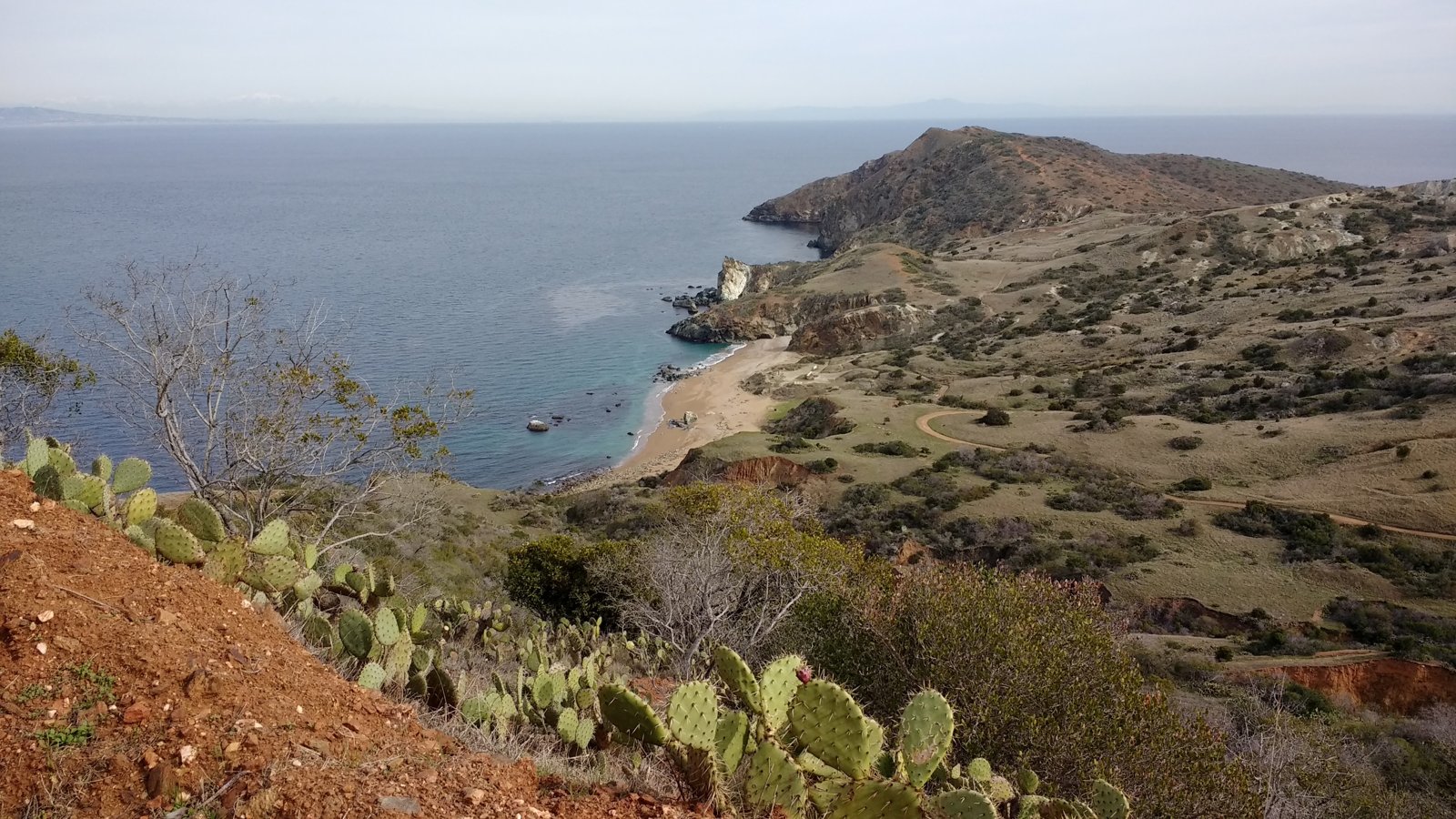
The Trans-Catalina Trail crosses Santa Catalina Island off the Southern California coast, from the town of Avalon on the east end out to Parsons Landing near the west end, then back to Two Harbors. Wikipedia gives its official length as 38.5 miles. Along the way it climbs over the island’s rugged interior and drops to beach campgrounds.
You can only camp at five reserved campgrounds, and water is limited between them.
The hike
The trail starts in Avalon. Wikipedia says the eastern trailhead is where Clarissa Avenue meets Crescent Avenue. Treeline Review starts at the Avalon ferry terminal. Love Catalina breaks the route into sections: Avalon to Black Jack, Black Jack to Little Harbor, Little Harbor to Two Harbors, Two Harbors to Parsons Landing, and Parsons Landing back to Two Harbors.
The first day climbs from the coast into the island’s interior. Bearfoot Theory lists Avalon to Black Jack Campground at 10.7 miles. AllTrails says Black Jack Mountain is the trail’s high point and offers primitive camping. Treeline Review lists picnic tables, water, and toilets at the Black Jack campground.
From Black Jack, the trail drops to the coast at Little Harbor. AllTrails lists this leg at about 8.1 miles and says it’s hot and mostly exposed. One reviewer had an excellent lunch at the Airport in the Sky along the way, and Love Catalina says you can buy water there. Treeline Review describes Little Harbor Campground as having toilets, water, and a cold shower, and Fresh Off the Grid calls it an island paradise with palms and crystal-blue water.
The leg from Little Harbor to Two Harbors is short but steep. AllTrails lists it at 5.3 miles and rates it hard, and says the steep, exposed climb between them lacks reliable natural water. One reviewer, hiking in reverse, called it the hardest leg of the trail. Fresh Off the Grid describes a somewhat sketchy descent into Little Harbor on what felt like a repurposed deer trail.
Two Harbors is the island’s other town. Treeline Review lists a ferry terminal, store, camping, hotel, water, food, showers, and laundry. Fresh Off the Grid says the campground is a quarter-mile walk from town.
The west end goes to Parsons Landing. Treeline Review calls it a quiet beach campsite that feels more rustic and less resort-like than Two Harbors or Little Harbor. Several sources say there’s no water spigot at Parsons; Cairn Project says you buy a locker with water instead. AllTrails says there’s no potable water along the West End Road, so collected water must be filtered. From Parsons, the trail loops back to Two Harbors to catch the ferry.
Cairn Project describes the trip as three to five days. Fresh Off the Grid suggests side trips, such as adding Starlight Beach near the west end via the Silver Peak Trail, for hikers with extra time.
Love Catalina says rangers are stationed at Hermit Gulch in Avalon, Little Harbor, and Two Harbors. AllTrails notes that food must be stored in animal-proof containers to deter foxes and ravens.
For another California trip on the coast, see the Lost Coast Trail.
Tips
- Reserve campgrounds first. Camping is only allowed at five designated campgrounds, and reservations are required.
- Carry water between campgrounds. Bearfoot Theory says there’s no potable water on the trail between them.
- Plan for Parsons Landing. There’s no spigot; you buy a water locker.
- Protect food from foxes and ravens. AllTrails says animal-proof containers are required.
- Expect heat and exposure. Reviewers describe long, sunny climbs.
Camping
Camping is only allowed at five designated campgrounds: Hermit Gulch, Black Jack, Little Harbor, Two Harbors, and Parsons Landing, according to Love Catalina and Wikipedia. Reservations are required. AllTrails says hikers need a free hiking permit from the Catalina Island Conservancy; Bearfoot Theory says your camping reservation serves as the permit. Confirm the current process with the Conservancy.
Inside Intel: Love Catalina says campers agree Little Harbor and Parsons Landing are the most scenic, thanks to their beachfront locations. At Black Jack, Bearfoot Theory recommends site #1 as the most secluded. Treeline Review adds that Parsons Landing feels more rustic than the other campgrounds.
Trail facts
- Distance: About 38.5 miles (official length per Wikipedia)
- Route type: Point to point, usually Avalon to Parsons Landing and back to Two Harbors; ferry access at both towns
- Difficulty: Strenuous. Steep climbs, exposure, and heat.
- Elevation: High point at Black Jack Mountain; low point at Parsons Landing (sea level)
- Campsites: Hermit Gulch, Black Jack, Little Harbor, Two Harbors, Parsons Landing (reservations required)
- Water: At Black Jack, Little Harbor, and Two Harbors; buy a water locker at Parsons Landing. None between campgrounds.
- Permits: Free Conservancy hiking permit plus campground reservations
- Food storage: Animal-proof containers for foxes and ravens
- Trailheads: Avalon (east); Two Harbors (west)
- Last verified: October 2, 2026
Where this comes from
This page draws on the sources below, along with other guides and trip reports. Links go to the original pages.
- Wikipedia: Trans-Catalina Trail
- Love Catalina: Exploring the Trans Catalina Trail
- AllTrails: Catalina Island Conservancy backpacking trails
- Treeline Review: Trans Catalina Trail guide
- Bearfoot Theory: Backpacking the Trans Catalina Trail
- Fresh Off the Grid: Backpacking the Trans Catalina Trail
- Cairn Project: How to Backpack the Trans-Catalina Trail
Before you go: This page is based on published trail guides, trip reports, and reviews, along with official park and agency information where we could find it. It’s meant to help backpackers discover new trails, not to replace current, official information. Conditions, closures, permits, campsites, and water sources change, and some details here may be out of date or wrong. Confirm everything with the managing agency and check current conditions before you head out, and don’t rely on this page alone for safety or navigation. Backcountry travel involves risk.