
Trails / California / Sierra Nevada
Little Yosemite Valley and Half Dome
Yosemite Wilderness, Yosemite National Park (Happy Isles, Yosemite Valley)
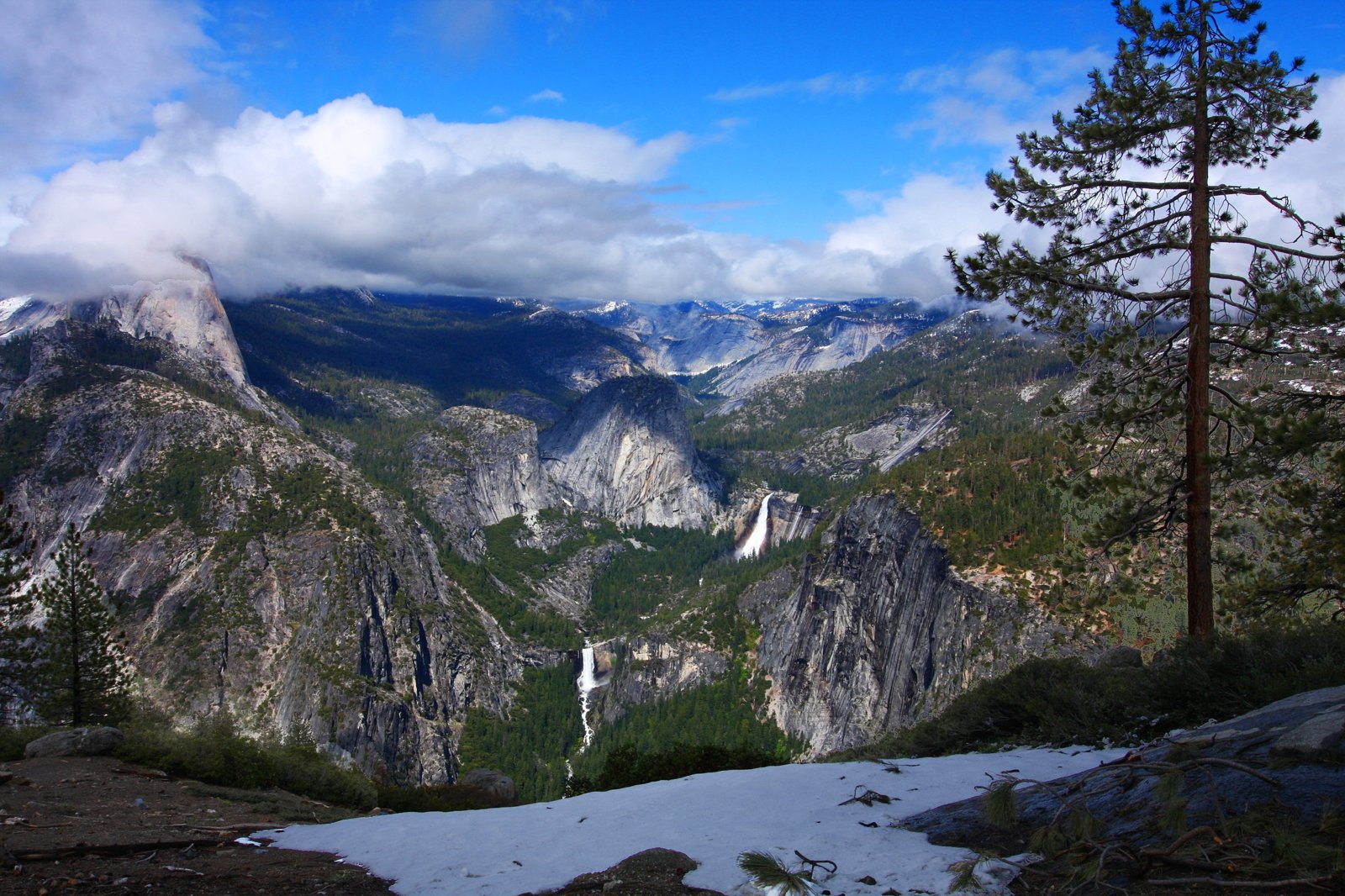
Little Yosemite Valley is the backpackers’ campground above Yosemite Valley, and the base camp for climbing Half Dome. The NPS calls it the most popular area in the Yosemite Wilderness, mainly because it gives easy access to Half Dome. From Happy Isles, the trail climbs the Mist Trail beside the Merced River to the campground, then continues to the granite dome and its famous cable route.
Permits here are among the hardest to get in the park, and climbing Half Dome needs its own permit when the cables are up.
The hike
High Sierra Trails gives the key numbers: Happy Isles trailhead at 4,035 feet, Little Yosemite Valley at 6,100 feet, about 2,065 feet of gain in 4.8 miles, and a strenuous climb with many steps. Outbound describes following the Mist Trail beside the Merced River before reaching the backpackers’ campground. The NPS says camping isn’t permitted between Yosemite Valley and Little Yosemite Valley, so the campground is the first legal stop.
The NPS lays out the campground rule. If your wilderness permit is for Happy Isles to Little Yosemite Valley or Glacier Point to Little Yosemite Valley, you must camp in the Little Yosemite Valley campground your first night, and you can stay there on later nights. With other trailheads, you camp elsewhere the first night. No other permit or reservation is required to camp there.
High Sierra Trails says many people heading to Little Yosemite Valley are John Muir Trail thru-hikers, while others are aiming for Half Dome or Clouds Rest. It describes Yosemite’s bears as among the most skilled food poachers in the Sierra, and says Little Yosemite Valley’s bears were once the best in the park at snagging food hung from trees, until canisters and bear boxes changed that.
Half Dome is the big day. Lily Tang describes the trail becoming wide and flat just before mile 3 from Little Yosemite Valley, until the base of the subdome. From there, the cables lead to the summit. High Sierra Trails calls the summit a 2-mile side trip from the main trail, and that cables are usually up from the Friday before Memorial Day through the day after Columbus Day.
The permits for Half Dome are their own system. The NPS says Half Dome permits are required seven days a week when the cables are up, even for backpackers with wilderness permits. Recreation.gov says you get one by reserving a Half Dome–eligible entry trailhead, including Happy Isles to Little Yosemite Valley, and then your whole group is eligible to hike the cables. It also warns that wilderness permits can’t be used for a day hike to Half Dome, and that leaving the wilderness, including passing through Yosemite Valley, invalidates your permit.
The NPS also says camping isn’t permitted on top of Half Dome or at Lost Lake. Recreation.gov adds that wilderness permits must be picked up in person at a Yosemite wilderness permit station. When the cables are down, Lily Tang notes, the support poles are removed and the cables are left lying flat on the rock instead of serving as handrails.
For the ultimate trip from here, High Sierra Trails notes the John Muir Trail runs 211 miles from Yosemite. For another Sierra overnight, see the Rae Lakes Loop.
Tips
- Reserve early. The NPS says permits for trails to Little Yosemite Valley are the hardest to get in the park.
- Get a Half Dome-eligible permit. Reserve a qualifying entry trailhead if you want to climb the cables.
- Bring a bear canister. One permit guide says canisters are mandatory and hangs aren’t allowed.
- Don’t leave the wilderness mid-trip. Recreation.gov says passing through Yosemite Valley invalidates your permit.
- Check the cables. Half Dome permits are needed when the cables are up; check the current season.
Camping
A wilderness permit is required year-round for overnight trips in the Yosemite Wilderness, reserved on Recreation.gov and picked up in person at a wilderness permit station. Camping on this route is in the designated Little Yosemite Valley campground. The NPS says a composting toilet is available near the campground and asks campers to pack out toilet paper and hygiene products. Sources describe shared bear lockers and communal fire rings. High Sierra Trails says your permit also lets you camp one night before and after at the Backpackers’ Campground in Yosemite Valley.
Inside Intel: Outbound’s tip is to use the communal bear lockers properly, storing only food there, and not to be shy about reminding others to put away food and dirty dishes. Lily Tang describes the campground as large and flat, shaded by trees, with water from the nearby Merced River. Reserve Nature’s sample itinerary uses the second day for either rest or Half Dome.
Trail facts
- Distance: About 4.8 miles to Little Yosemite Valley; about 15 miles round trip including Half Dome
- Route type: Out and back
- Difficulty: Strenuous. Steep steps on the way up; exposed cables on Half Dome.
- Elevation: Happy Isles 4,035 feet; Little Yosemite Valley 6,100 feet (High Sierra Trails)
- Campsites: Little Yosemite Valley designated campground (no other camping between Yosemite Valley and Little Yosemite Valley)
- Water: Merced River. Treat all water.
- Permits: Wilderness permit required year-round; Half Dome permit required when cables are up
- Bear and food storage: Canisters and bear lockers; confirm rules
- Trailhead: Happy Isles, Yosemite Valley
- Last verified: October 2, 2026
Where this comes from
This page draws on the sources below, along with other guides and trip reports. Links go to the original pages.
- National Park Service: Half Dome and Little Yosemite Valley
- National Park Service: Half Dome Permits for Backpackers
- Recreation.gov: Yosemite National Park Wilderness Permits
- High Sierra Trails: Little Yosemite Valley
- High Sierra Trails: Little Yosemite Valley camping
- Lily Tang: Backpacking Half Dome
- Outbound: Little Yosemite Valley and Half Dome
- Reserve Nature: Yosemite permits guide
Before you go: This page is based on published trail guides, trip reports, and reviews, along with official park and agency information where we could find it. It’s meant to help backpackers discover new trails, not to replace current, official information. Conditions, closures, permits, campsites, and water sources change, and some details here may be out of date or wrong. Confirm everything with the managing agency and check current conditions before you head out, and don’t rely on this page alone for safety or navigation. Backcountry travel involves risk.