
Trails / Alaska / Kenai Peninsula
Russian Lakes Trail
Chugach National Forest, Seward Ranger District (Kenai Peninsula, near Cooper Landing)
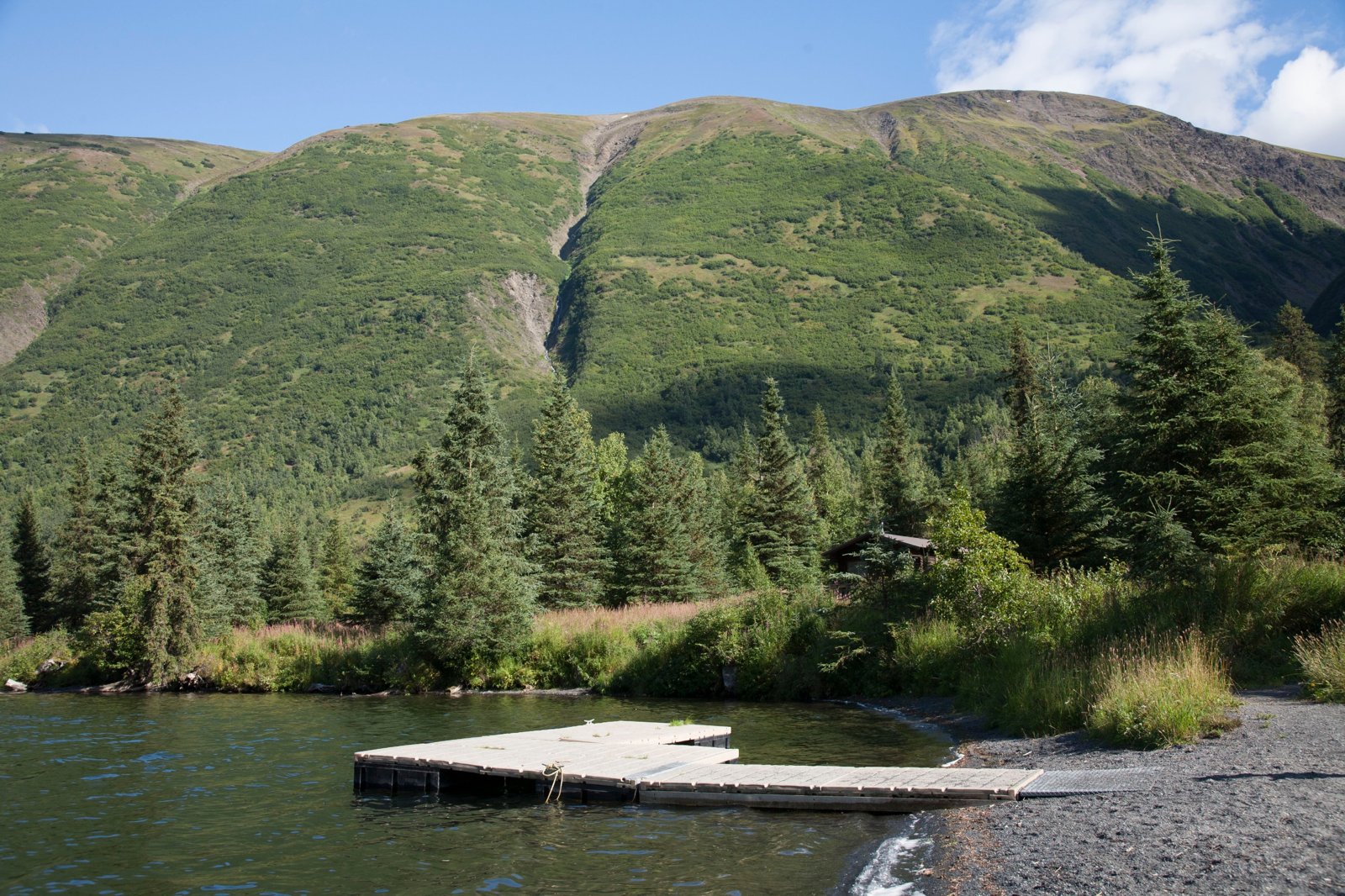
The Russian Lakes Trail follows the Russian River valley through the Kenai Mountains, from the Russian River Campground near Cooper Landing past Russian River Falls and Lower and Upper Russian Lakes to Cooper Lake. ALASKA.ORG calls it a popular 21-mile route with three Forest Service cabins and numerous campsites.
The Forest Service lists public use as heavy as far as Russian River Falls and low to moderate beyond.
The hike
The Forest Service map sheet gives the trail’s length as 21.78 miles and rates it easy to moderate. The north (west) trailhead is reached by turning into the Russian River Campground at mile 52.6 of the Sterling Highway; trailhead parking is a mile further. The east trailhead is 12 miles up Snug Harbor Road from mile 48 of the Sterling Highway, near Cooper Lake.
From the Russian River Campground, the Forest Service says, the first 3 miles are heavily used for fishing access to the Russian River and Lower Russian Lake. Russian River Falls, at mile 2.4, makes an easy day hike. Beyond, public use drops off.
The Forest Service describes Barber Cabin as a 16-by-20-foot log cabin on Lower Russian Lake, surrounded by spruce forest and meadows with mountain views, sleeping up to six. Its map sheet puts the cabin at mile 3.4. Aspen Flats Cabin, a 12-by-14-foot rustic cabin, sits along the upper Russian River between the two lakes at about mile 9. Upper Russian Lake Cabin comes at about mile 12. ALASKA.ORG lists campsites at miles 5.68, 7.72, and 10.94, with two sites at the last.
The Forest Service says the trail follows the valley past both lakes, then climbs gradually toward the Cooper Lake end. Its map sheet warns of reddish-gray dead trees along the trail, killed by spruce bark beetles. ALASKA.ORG lists more campsites farther along, at miles 17 and 19.2.
At mile 16.2, the Resurrection River Trail branches off to the south. The Forest Service describes that 16-to-17-mile trail as dense spruce and hemlock forest toward Exit Glacier Road near Seward, becoming narrow, rough, and muddy beyond Martin Creek. Between Martin Creek and the Russian Lakes junction, it calls travel suitable only for experienced hikers who can navigate without a trail. ALASKA.ORG notes that an ambitious, well-prepared backpacker could link the Resurrection River, Russian Lakes, and Resurrection Pass trails for a 70-mile trip from near Seward to Hope. That’s a much more serious undertaking than the Russian Lakes Trail alone. ALASKA.ORG says the Resurrection River route isn’t often used by through hikers. Its first 4.5 miles from Exit Glacier Road to Martin Creek are gentler, with two primitive campsites and occasional river views.
In winter, the Forest Service says, skiing is usually good from the Russian River Campground to Barber Cabin, but there are major avalanche zones to cross. The last 2.5 miles of Snug Harbor Road aren’t plowed in winter, and the road may be icy.
For the classic Kenai cabin-to-cabin trip, see the Resurrection Pass Trail. Its southern trailhead is also near Cooper Landing.
Tips
- Start early near the river. The Forest Service says the first 3 miles are heavily used for fishing access.
- Reserve cabins ahead. Barber, Aspen Flats, and Upper Russian Lake Cabins are by reservation.
- Plan the shuttle. The two trailheads are on different roads: the Russian River Campground at mile 52.6 of the Sterling Highway, and Snug Harbor Road off mile 48.
- Be bear aware. This is bear country along a busy fishing river. Carry bear spray and store food properly.
- Don’t treat Resurrection River as an easy exit. The Forest Service says much of it is primitive and hard to follow.
Camping
The Forest Service map sheet describes multi-day trips using designated campsites at Lower and Upper Russian Lakes, or the Barber, Aspen Flats, and Upper Russian Lake Cabins. ALASKA.ORG lists additional campsites along the way. Cabins require a reservation. Contact the Seward Ranger District at (907) 288-3178 for current conditions.
Inside Intel: We didn’t find camper accounts recommending a specific site. ALASKA.ORG’s campsite list shows two sites at mile 10.94, near Upper Russian Lake Cabin. Those put you well past the busiest fishing miles. Barber Cabin, on Lower Russian Lake at mile 3.4, is the easy option for a short first day.
Trail facts
- Distance: About 21.8 miles one way
- Route type: Point to point, or out and back from either end
- Difficulty: Easy to moderate (Forest Service)
- Campsites: Designated campsites; Barber (mile 3.4), Aspen Flats (about mile 9), and Upper Russian Lake (about mile 12) Cabins by reservation
- Water: River, lakes, and creeks. Treat all water.
- Permits: None found for camping; cabins by reservation
- Bear and food storage: Bear country; store food properly
- Trailheads: Russian River Campground (mile 52.6 Sterling Highway); Cooper Lake end via Snug Harbor Road (mile 48 Sterling Highway)
- Last verified: September 28, 2026
Where this comes from
This page draws on the sources below, along with other guides and trip reports. Links go to the original pages.
- U.S. Forest Service: Russian Lakes Trail map sheet
- U.S. Forest Service: Chugach National Forest recreation (cabin listings)
- U.S. Forest Service: Resurrection River Trail
- U.S. Forest Service: Chugach National Forest hiking and backpacking
- ALASKA.ORG: Guide to Backpacking the Russian Lakes Trail
- ALASKA.ORG: Resurrection River Trail
Before you go: This page is based on published trail guides, trip reports, and reviews, along with official park and agency information where we could find it. It’s meant to help backpackers discover new trails, not to replace current, official information. Conditions, closures, permits, campsites, and water sources change, and some details here may be out of date or wrong. Confirm everything with the managing agency and check current conditions before you head out, and don’t rely on this page alone for safety or navigation. Backcountry travel involves risk.